Ellicott City Wood Flooring has handled wood-flooring in Baltimore Highlands for owners and landlords alike over more than 20 years in the trade. Much of our work here happens in the short window between one tenant moving out and the next moving in, when a floor has to be judged, repaired and finished on a deadline rather than at leisure.
We refinish worn solid hardwood, run screen and recoat jobs on floors that only need a fresh top coat, replace damaged boards, and sand and finish stair treads. Before any sanding starts, we check the year the house was built and look over painted surfaces, because homes built before 1978 fall under lead-safe renovation rules and that check shapes how the job is set up.
Every job comes with a written, itemized estimate, and the finished work comes with an itemized invoice. For a landlord, that paperwork goes straight into the property file and backs up any deduction taken from a security deposit under Maryland law.
Who Owns and Who Rents in Baltimore Highlands
The split between owners and renters here is sharper than in most of the communities we serve, and it tracks house type closely. That pattern decides which floors we see most often and how the work tends to be scheduled.
A Community With Nearly Half Its Households Renting
According to the 2024 American Community Survey five-year estimates, 1,337 of the 2,911 occupied households in Baltimore Highlands rent, which works out to 45.9 percent. That means a good portion of the floors we refinish here belong to someone who does not live on them.
For us, that changes the conversation at the start of a job. A landlord is weighing cost per year of service, how fast the unit can be shown, and how the floor will hold up under the next lease, while an owner-occupant is often thinking about color and feel first.
Renters Live in Attached Houses, Owners in Detached Ones
The same survey shows 845 renter households in one-unit attached houses, which is 63.2 percent of all renter households. Only 70 renter households live in detached houses. Owners run the other way: 1,225 owner households, or 77.8 percent, live in detached houses, and 349 own an attached house.
So when we pull up to an attached house in Baltimore Highlands, odds are good it is a rental between tenants. When we pull up to a detached house, it is usually the owner who opens the door and lives with the result.
What Each Side Usually Asks Us
Landlords tend to ask the same few questions: will a recoat carry the floor through another lease, how many days the unit sits empty, and what the line items will look like in the file. We answer those with readings and photos from the walk-through rather than a guess, and we say plainly when a cheaper pass will only postpone a full sand by a year.
Owner-occupants ask different things. They want to know whether a darker stain will show dust, whether a hardwax oil or a polyurethane suits the way they live, and how to keep pets and children off the floor while it cures. Both conversations end in the same written estimate, just weighted toward different priorities.
Looking for wood-flooring closer to Upton? See Wood-Flooring in Upton.
Floors in Rented Attached Houses, and What Happens Between Tenants
Attached houses share walls, and in a rental they also share a predictable wear pattern. Traffic lanes run from the front door to the kitchen, rug shadow outlines where a tenant’s furniture sat, and pet urine stains or water stains show up near doors and sinks.
Reading the Floor at Move-Out
We start every turnover by walking the empty rooms and reading the floor as it is, not as the listing photos remember it. We look for gray or dark stains that have soaked into the wood, peeling polyurethane at doorways, nail pops, squeaky floorboards, and board gapping that may only be the winter gaps a heated house opens in a dry month.
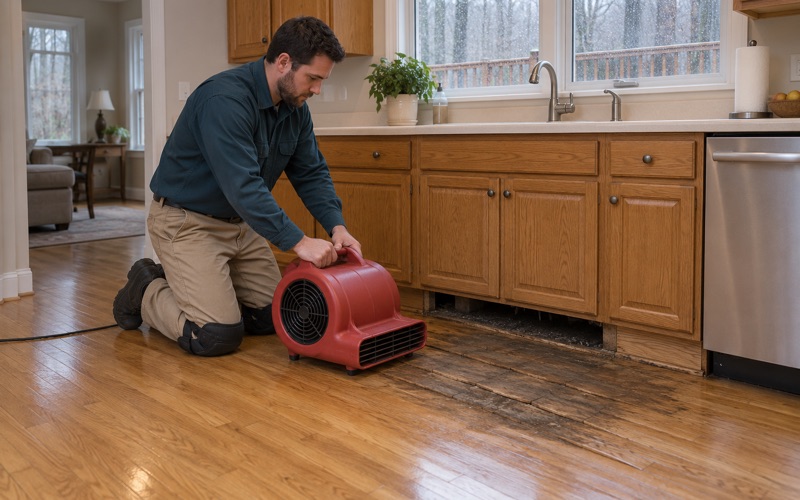
We take moisture meter readings where we see stains or cupping, since a board that is still wet will not take a finish well. Those readings, along with photos and notes, go into the estimate so the landlord knows what each line item is for.
Screen and Recoat, Full Refinish, or Board Replacement
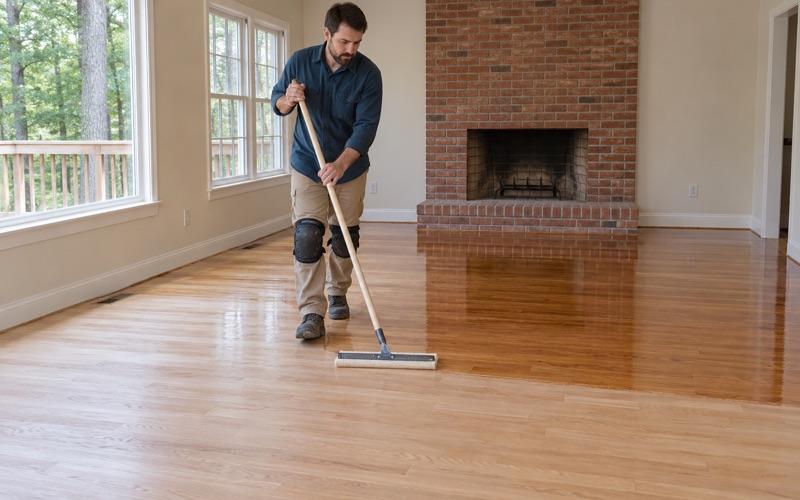
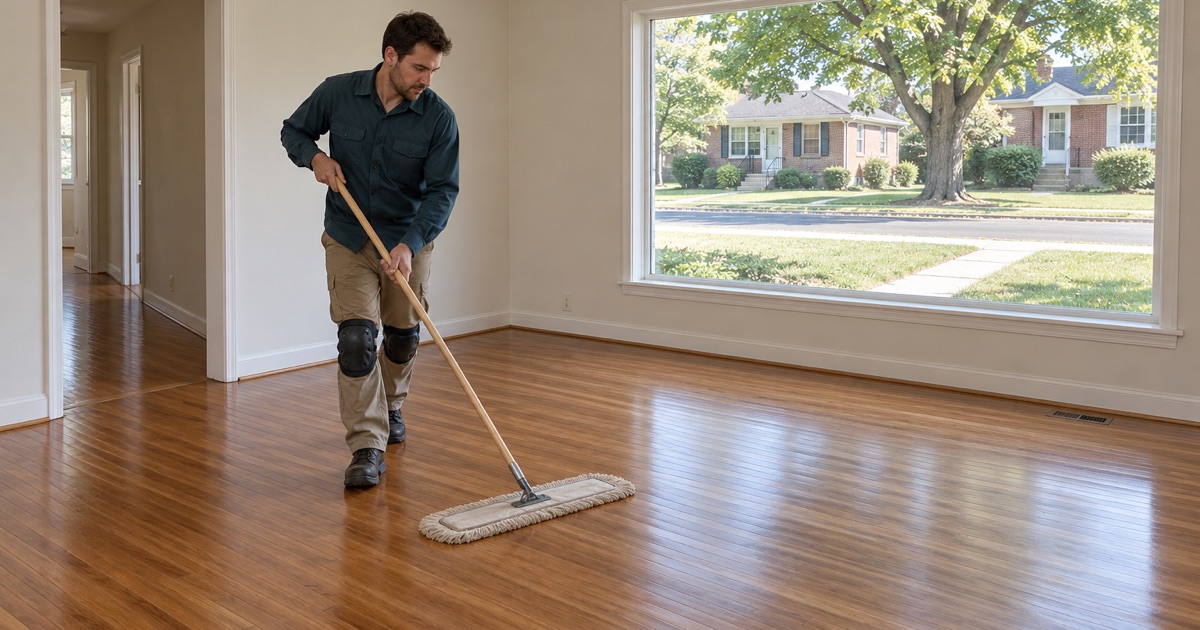
If the finish is dull and scratched but the wood underneath is clean, a screen and recoat is usually the right call. We abrade the existing finish, vacuum with a HEPA vacuum, and lay down a fresh coat, which gets a rental back on the market quickly and costs far less than a full sand.
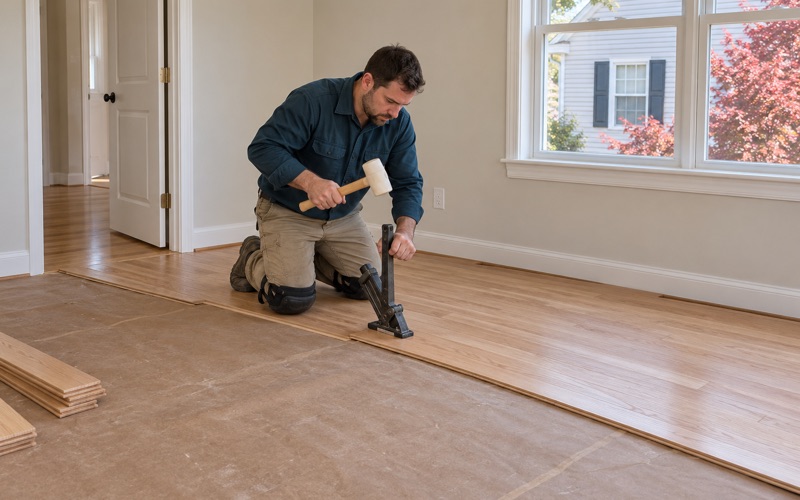
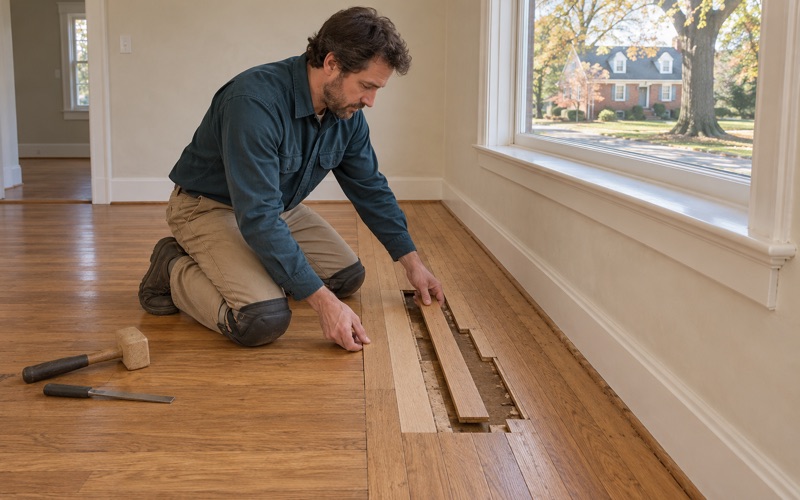
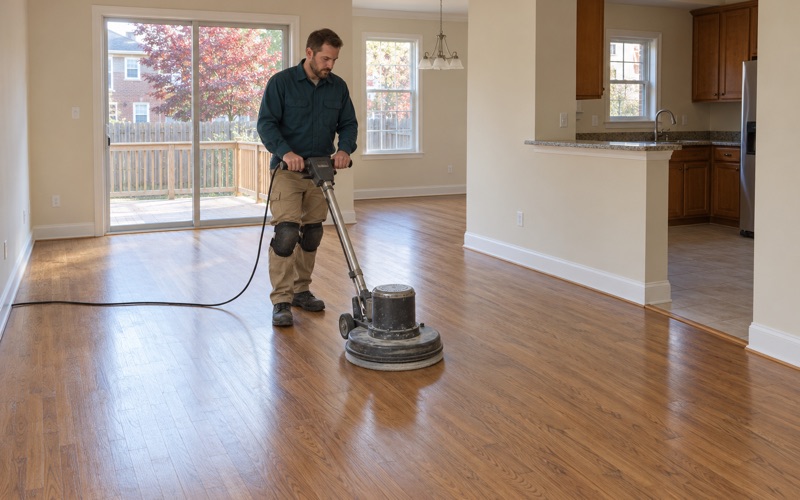
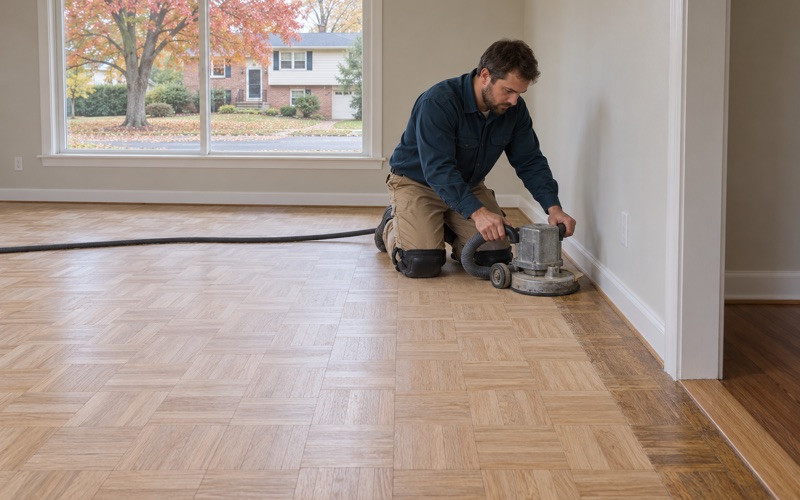
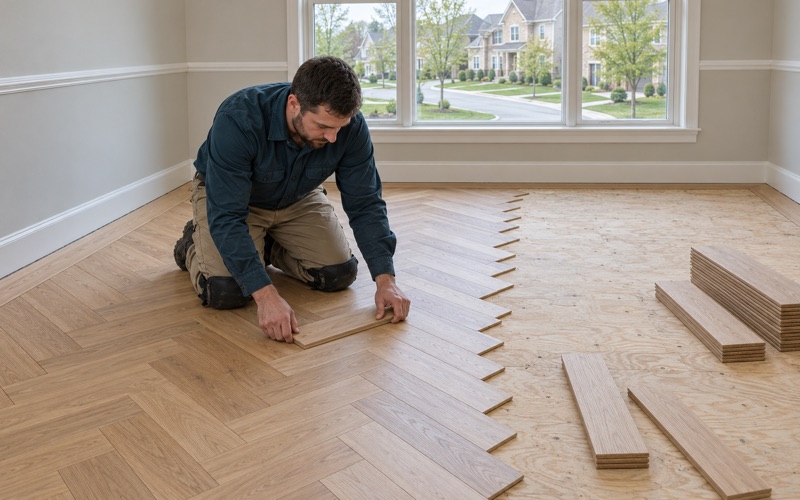
When traffic lanes have worn through to bare wood or stains have gone deep, a full refinish with a drum sander and an orbital sander through a proper grit sequence is the honest answer. Where stains or damage have reached through the board, we cut out the bad pieces and set new ones with a weave-in repair so the floor reads as one surface rather than a patch.
Finishes That Stand Up to the Next Lease
For rentals we usually recommend a waterborne polyurethane in a satin or matte sheen level. It dries fast enough to keep a turnover on schedule, it holds its color without the orange oak cast an oil-modified polyurethane builds over time, and a lower sheen hides the fine scratches a tenant’s chairs will add.
We pick finishes that fit Maryland’s VOC limits for wood coatings and plan the drying and cure times around the move-in date. If a unit has a tight gap between tenants, we tell the landlord up front how many coats fit in the window and when the floor can take furniture.
Detached Owner Homes in the 1909 Sections
The detached homes where most Baltimore Highlands owners live sit on land with a long subdivided history. The area takes its shape from a single large property that was broken into named sections more than a century ago.
The English Consul Estate and Its Sections
Baltimore Highlands grew out of the English Consul estate of William Dawson. In 1909, developers purchased the property and subdivided it into Baltimore Highlands, Rosemont, Friendship Gardens, and English Consul sections, and those section names still turn up when owners describe where they live.
The community sits directly south of the city of Baltimore but is not part of it. It is unincorporated and governed by Baltimore County, which handles permits through its Department of Permits, Approvals and Inspections.
Housing From Several Eras
The housing stock here spans many decades. The survey counts 630 units built in 1939 or earlier, about 20.1 percent of the total, and 799 built in the 1950s, about 25.6 percent, with smaller numbers from every decade since.
That spread means we do not assume what is under the carpet. Under the carpet we may find red oak strip flooring, a plank subfloor, or later layers of resilient floor tile. We pull a corner, read the boards and the joist direction, and plan from what we actually find.
Older Floors and Old Tile
On older solid hardwood, we check how much wood is left above the tongue before we decide whether a floor can take another full sand. A floor that has been sanded several times may only have room for a light pass or a screen and recoat.
If we lift carpet pad and tack strip and find old resilient tile set in black mastic, we stop. That material is identified before anything is sanded and left for the trade that handles it, and we pick up again once it is cleared.
Planning Floor Work for a Baltimore Highlands Rental
A good turnover floor job starts before the tenant hands back the keys. The more we know about the unit ahead of time, the shorter the vacancy and the fewer surprises on the invoice.
Timing Around the Lease
We ask landlords to call us when notice is given rather than when the unit is empty. That lets us look at the floor during a walk-through, rough out whether it needs a recoat or a full refinish, and hold a date on our schedule that lines up with move-out.
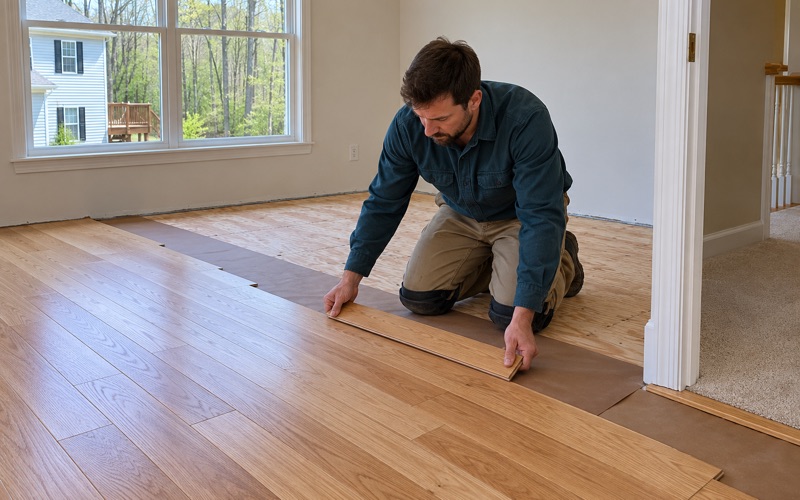
A screen and recoat usually fits within a few days, including cure time before furniture. A full refinish with stain takes longer, and if boards need replacing we build in acclimation time for the new wood before it goes down.
Dust, Access and Neighbors Through the Wall
In an attached house, the people next door share a wall with the work. We contain dust to the rooms being worked on, seal doors and returns, and run HEPA vacuums at every stage so the house and its neighbors are not living with sanding dust.
The Baltimore Highlands Light Rail station is close at hand for tenants who commute, but for us the practical question is parking and access for equipment. We confirm where our van can sit and how the drum sander gets in before the day of the job.
Stairs That Take the Hardest Wear
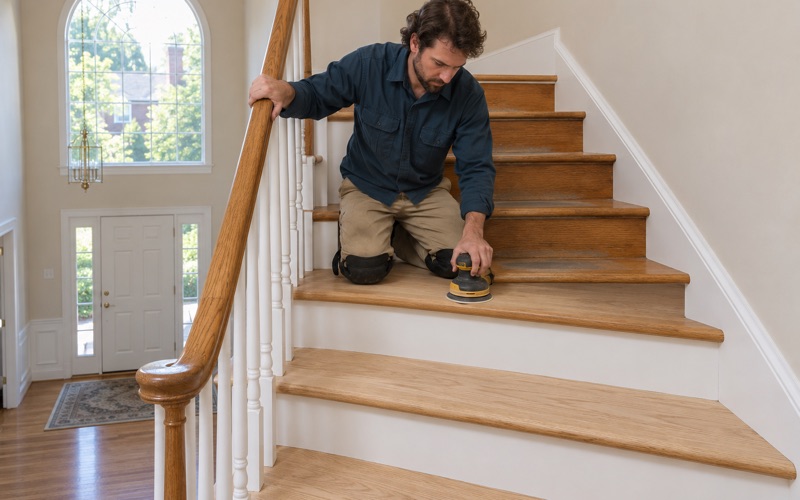
In an attached house the staircase often carries every trip a tenant makes, and the stair nosing is usually the first thing to wear through. We quote stairs tread by tread, because a staircase is not priced by the square foot, and we note which treads need sanding, which need a new piece, and whether the stair risers are painted.
When carpet comes off a staircase, we pull every tack strip and staple before judging the wood. Some treads clean up well with a sand and finish, while others are cracked or patched and are better replaced so the run looks consistent from the bottom step to the top.
Paperwork a Landlord Can Use
Each turnover job ends with an itemized invoice that names the rooms, the work done, and the finish used. If the landlord is deducting part of a security deposit for floor damage, that invoice gives the supporting documentation the deduction needs.
For owner-occupants, the same written estimate and invoice are useful later for an insurer or a sale. Before we pick a color on any floor, we lay stain and sheen samples on the boards themselves so the choice is made on real wood in real light.
- 20+ Years on Wood Floors
- Written, Itemized Estimates
- Dust Sealed Into the Work Area