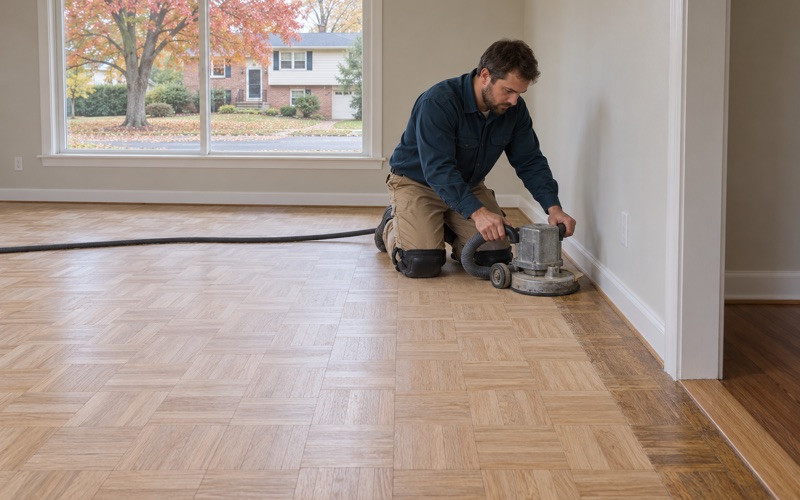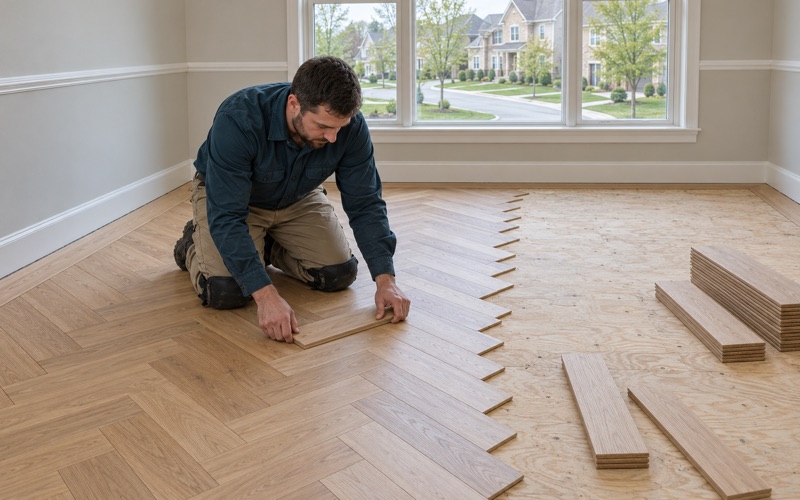
Ellicott City Wood Flooring has spent more than 20 years on wood-flooring in Catonsville and the rest of the county, and much of what we do here is careful work on floors that came with the house. A Catonsville homeowner calling us is more often trying to save a worn floor than shopping for a new one, so our first visit is spent reading what is already down.
That reading covers the boards, the finish, the fasteners and the wood that remains above the tongue. It also covers the house itself: the build year, any painted trim or floors, and whether old tile or adhesive is hiding under carpet. Those answers decide whether a room gets a screen and recoat, a full sand, a repair, or a different plan entirely.
You get the result as a written, itemized estimate that lists each room and each step. It is a document you can keep, whether you are budgeting a single parlor or planning work through a whole floor of the house.
How Catonsville’s Older Houses Got Their Floors
From turnpike summer houses to a year-round suburb
Frederick Road began as the turnpike from Baltimore to Frederick, and the town grew along it. Wealthy Baltimore merchants built large Victorian and colonial summer homes here to escape the city’s summer heat. Starting in 1862, horsecar service connected Catonsville to Baltimore, and in 1884 the Catonsville Short Line railroad began running eight round trips a day.
Those links turned a seasonal retreat into a place people lived all year. The Maryland Historical Trust describes that shift as the evolution of a community from summer homes to year-round suburban living in the late 19th and early 20th centuries. The houses built during that change are the ones we are usually called into.
Two National Register districts that record the stock
The Old Catonsville Historic District, bounded on the south by Frederick Road, covers buildings from 1866 to 1950. Its styles run from vernacular I-houses through Queen Anne, Bungalow, Colonial Revival, Dutch Colonial, Tudor Revival and Craftsman. Across the road, the Central Catonsville and Summit Park Historic District spans 1869 to 1958 and is entirely residential, with 349 contributing resources.
We read these districts as a record of when and how the houses were built, which tells us a lot about the floors inside. Within Summit Park, bungalows, American Foursquares, Georgian Colonial Revivals and Dutch Colonial Revivals predominate. Its anchor is The Summit, the Gary Mansion, an 1850s Second Empire summer house.
How many prewar floors are still in service
Census figures put a number on it. Of 16,926 homes in Catonsville, 3,132 were built in 1939 or earlier, according to the ACS 2024 five-year estimates, and another 1,091 went up in the 1940s. That is a large share of floors that are well past their first finish.
Most of those houses are lived in by their owners, and many have had several owners and several refinishing jobs. A floor that has been in service that long carries the marks of every one of them, and that history shapes the work more than any style choice does.
Looking for wood-flooring closer to Woodlawn? See Wood-Flooring Services in Woodlawn.
Floors in Queen Anne, Foursquare and Bungalow Houses
What tends to be underfoot
The floors we find in these houses are usually narrow tongue-and-groove strip, nailed through the tongue or face nailed to the subfloor, sometimes with a border or an inlaid field in the front rooms. We identify the species on site rather than assuming it, because the stain, the sanding approach and any replacement boards all depend on what is really there. Old pine and narrow oak strip each behave differently under a drum sander.
What sits on top of the wood matters as much. We often find wax residue, several coats of orange-toned finish, peeling polyurethane, or paint along the edges where a rug once sat. Each of those changes the grit sequence and how much wood a full sand will take off.
Lead paint and old resilient tile
Every house built before 1978 falls under lead-safe renovation rules, and nearly every house in these districts qualifies. We check the build year and any painted surfaces before a sander touches the floor, because painted baseboards, shoe molding and painted floor margins are common in houses this old. Dust stays contained to the rooms being worked on, with doors and returns sealed.
Kitchens, back halls and later additions sometimes hide resilient floor tile laid over the wood, set in black mastic. We identify that layer before anything is sanded and leave its removal to the right trade. Grinding through it with a floor sander is not a shortcut we take.
Rooms that changed around the floor
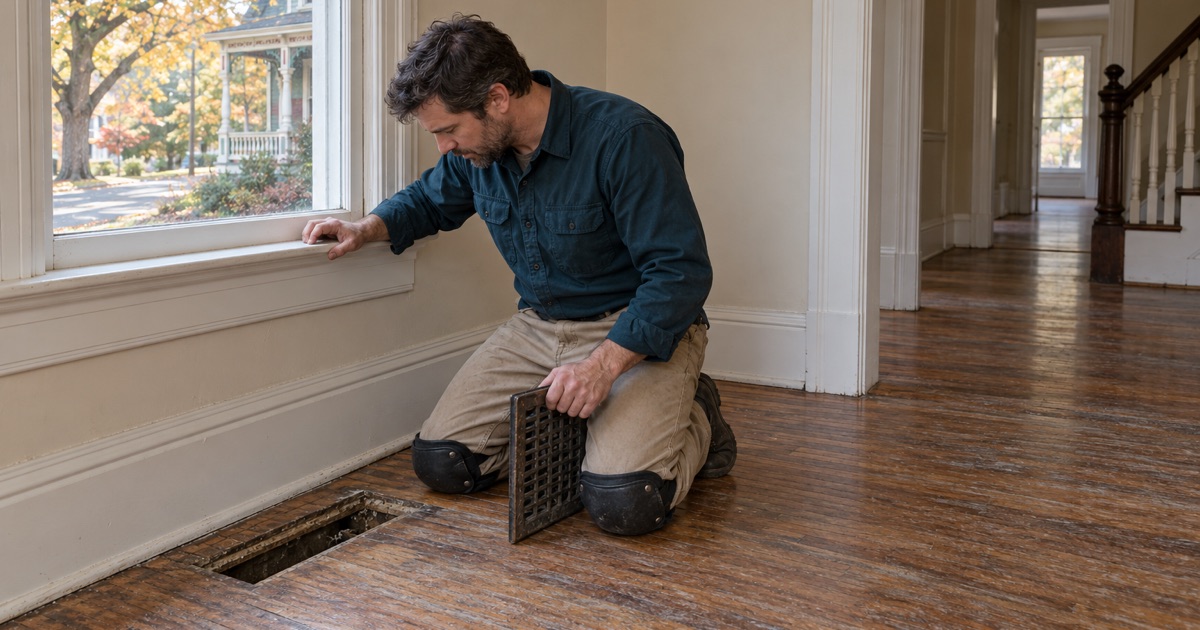
A century of living rearranges a house. Radiators come out, floor registers are moved, a wall between two parlors is removed, or a kitchen is opened to a dining room. Each change can leave a hole, a strip of mismatched boards, or a seam where two floors meet.
Those scars are the reason so many Catonsville jobs mix refinishing with repair. We plan both together so the patched area is sanded and finished with the rest of the room instead of standing out afterward.
Refinishing a Floor That Has Been Sanded Before
Checking the wood left above the tongue
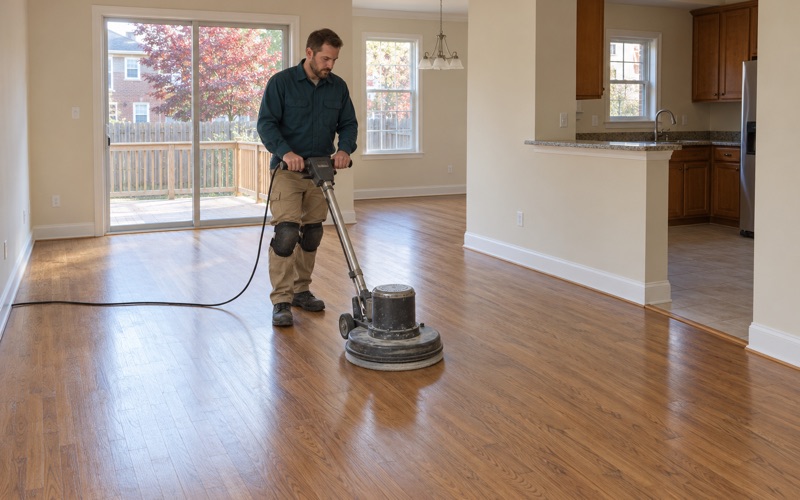
Every full sanding removes some of the wear surface, and a floor this old has usually been sanded more than once. Before we quote a sand and refinish, we look at a board edge at a register opening, a threshold or a pulled board to see how much wood remains above the tongue. That check decides how aggressive the grit sequence can be.
Where the wear surface is thin, exposed nail heads, splintering at the tongue and visible grooves between boards are the warning signs. In that case we may recommend a lighter approach or targeted board replacement rather than sanding the whole room down to the same depth.
When a screen and recoat is enough
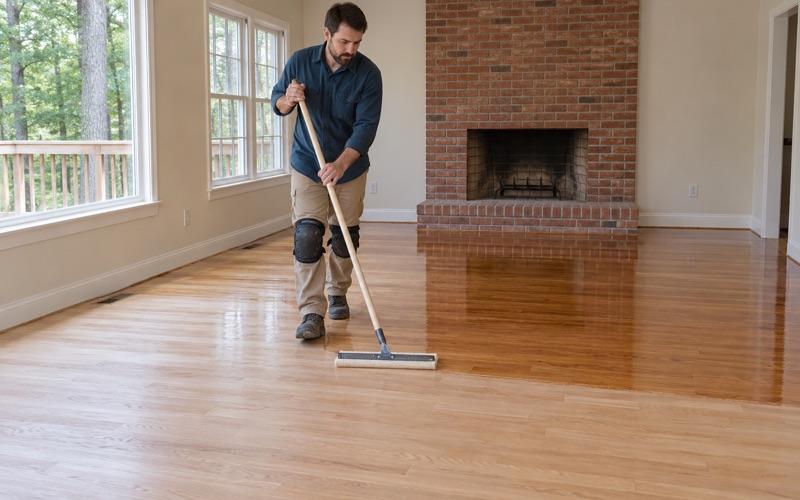
Not every dull floor needs a full sand. If the existing finish is sound and only the top coat is scuffed in traffic lanes, a screen and recoat restores the sheen without cutting into the wood at all. On a floor with limited wood left, that choice protects the house for the next owner too.
A screen and recoat will not fix gray water stains, pet urine stains or rug shadow, and it will not bond over wax residue. We test the old finish first, then tell you plainly whether a recoat will hold or whether the floor needs to come down to bare wood.
Stain, sheen and finish choices for an older room
Color is easier to judge on your own boards than on a sample card. We lay stain and sheen samples on your floor before a color is chosen, so you can see them against your trim and in your own light. Old strip floors often take stain unevenly, and a sample shows that before the whole room is committed.
For the finish, we compare waterborne polyurethane, oil-modified polyurethane and hardwax oil against how the house is used. Every option we offer fits Maryland’s VOC limits for wood coatings, and we plan fumes and drying times around the household so you know which rooms are off limits and for how long.
Weaving In Boards and Planning the Work
Matching width, thickness and grain
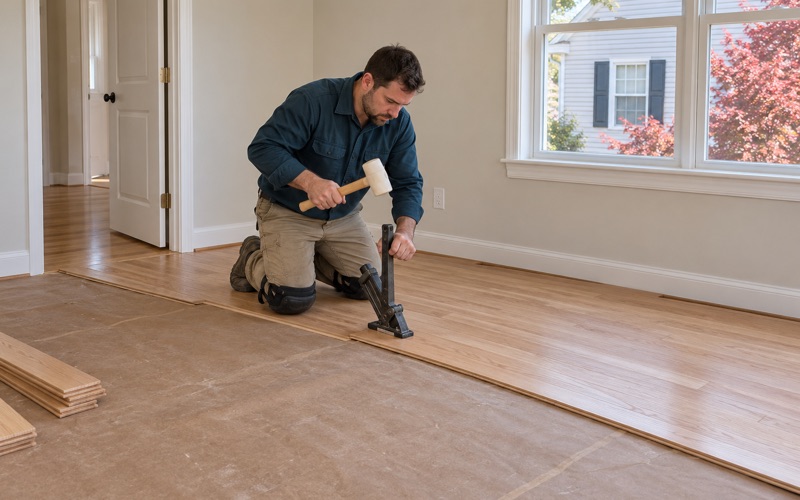
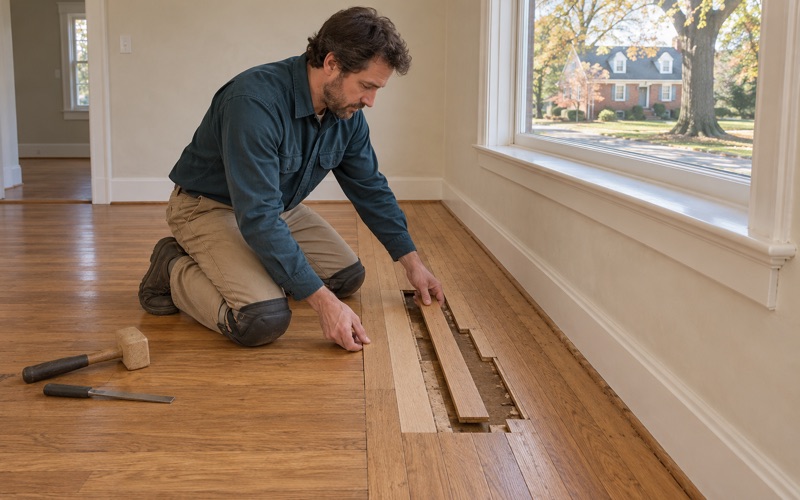
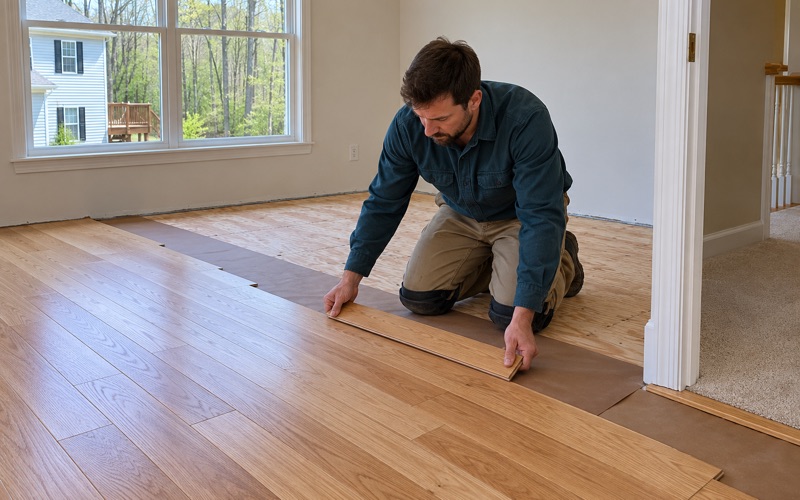
A weave-in repair works only when the new boards match the old ones in width, thickness and grain. We measure the existing strip and source boards to match, then cut back the damaged area in a staggered pattern so the end joints fall the way the original layout does. A straight patch line across a room is the thing we are trying to avoid.
Where a radiator, floor register or old wall came out, we weave the new boards into the surrounding floor rather than setting a square plug. The same approach handles boards lost to termite damage, powderpost beetle activity with fresh frass, or a section that cupped after a leak.
Blending repairs into a century-old finish
New wood and wood that has aged for decades will not match straight out of the box. We sand the repair together with the surrounding floor so the boards sit flush, then use the on-floor samples to bring the stain into line. On a full refinish, the repaired area simply becomes part of the room.
If you only want a repair and not a full refinish, we tell you how close a spot finish can get on that particular floor. Sometimes the honest answer is that refinishing the whole room is the only way to hide the patch.
Scheduling, stairs and the paperwork
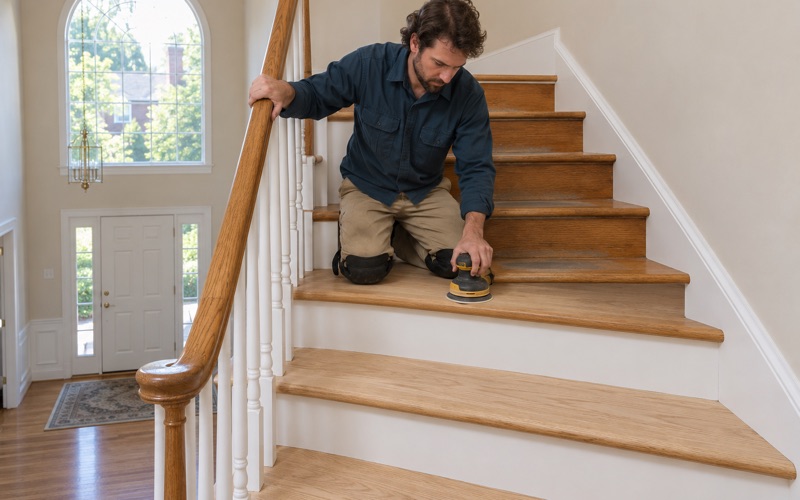
Stairs in these houses are quoted tread by tread, since worn treads, loose risers and rounded nosing are priced by the step, not the square foot. If the house is a rental built before 1978, we schedule the floor work around the lead dust test Maryland requires at each change of tenant. An itemized invoice also gives a landlord the supporting documentation Maryland’s security deposit law asks for.
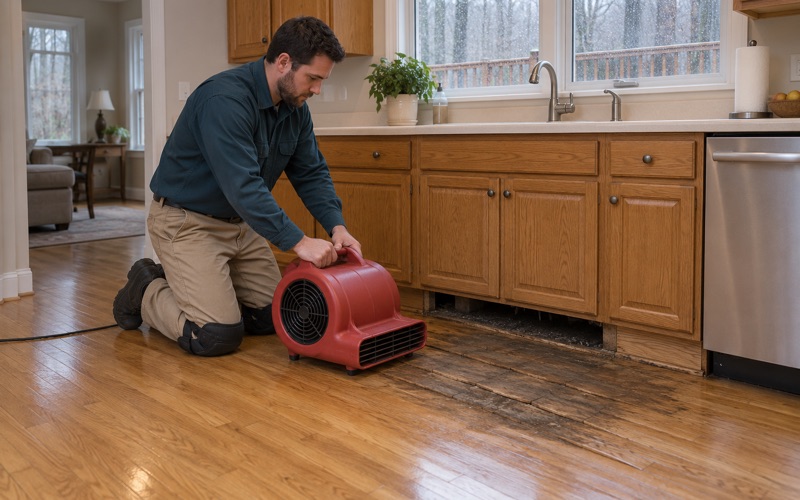
Catonsville sits in the National Weather Service forecast zone named Southern Baltimore, and humid summers and dry heated winters move old floors. Winter gaps that open between boards and close again in summer are normal in a prewar room. We take moisture meter readings before any repair, and we time finish work so it is not fighting the season.
- 20+ Years on Wood Floors
- Written, Itemized Estimates
- Dust Sealed Into the Work Area