Ellicott City Wood Flooring has spent more than 20 years on wood flooring in Fulton and across Howard County, and much of our work here starts with a floor that has not been touched since the house was new. We refinish, recoat, repair and replace hardwood, and we install new solid and engineered floors in single-family homes, townhouses and condos.
Newer houses wear in predictable ways: traffic lanes through the kitchen, a dull finish by the back door, gaps that open each winter and close each summer. We read those signs before we quote, because the answer is not always a full sanding. Sometimes a screen and recoat is enough, and sometimes the right call is new boards.
Every estimate we write is itemized and yours to keep, whether it ends up in an insurance file or a sale folder. We lay stain and sheen samples on your own floor before anyone settles on a color, and dust stays in the rooms we are working on, with doors and returns sealed off.
Maple Lawn and the Farm-to-Subdivision Wave in Fulton
A crossroads that grew up all at once
Fulton is an unincorporated census-designated place in southern Howard County, with the Patuxent River to the south and US 29 to the east. It took its current name on 28 March 1882. For most of its history the land around it was farmed, and the housing stock shows how quickly that changed.
The Census Bureau’s 2024 American Community Survey estimates count 1,952 housing units in Fulton, and 1,849 of them were built in 2000 or later. That is 94.7 percent of the homes, with 1,261 going up between 2010 and 2019 alone. Few places in the county have a housing stock this uniform in age, and it shapes what a floor contractor finds inside.
From the Iager farm to Maple Lawn
Much of that growth sits on land tied to the Iager family farm. Heinrich Iager bought 108 acres in 1839, and the property is remembered as the former Iager turkey farm. Greenebaum & Rose Associates proposed a dense 1,168-unit mixed use project for part of a 506-acre farm, a plan that went through 32 record-length hearings.
Maple Lawn, the mixed residential and commercial community that came out of it, started in 2004/2005. Its homes sit close to the street on smaller lots, and 2010 reporting named NV Homes building townhomes there alongside single-family houses from Mitchell & Best and Miller & Smith.
Why the age of the house matters to us
When nearly every home was built within the same span of years, the floors in them reach the same decision point at about the same time. We are seeing that now across Fulton, as the earliest Maple Lawn houses pass 20 years and the 2010s homes pass 10. The pre-1978 lead questions that drive so much of our work in older parts of the county rarely apply here, though we still confirm the build year before any sanding.
Looking for wood-flooring closer to Lansdowne? See Wood-Flooring in Lansdowne.
Builder-Grade Floors at 10 to 20 Years: What Wears First
Finish wear before wood wear
A production-built home goes up on a schedule, and its floors were chosen to fit that schedule and a price across many houses. We never assume what is under the finish. Whether a Fulton floor turns out to be solid hardwood, an engineered plank or a surface that only looks like wood, we identify it on the first visit, because every option that follows depends on it.
On real wood, the first thing to go is usually the finish rather than the wood. Traffic lanes from the garage entry to the kitchen, a gray haze in front of the sink and scratches under the dining chairs all show up in the top coat long before the boards themselves are worn.
Movement, gaps and squeaks
Newer houses also settle. Flooring cleats and face nails loosen as framing dries out, and squeaky floorboards and nail pops on the upper level are among the complaints we hear most in homes of this age. Winter gaps that open between boards in January and close again by July are seasonal movement, not a defect.
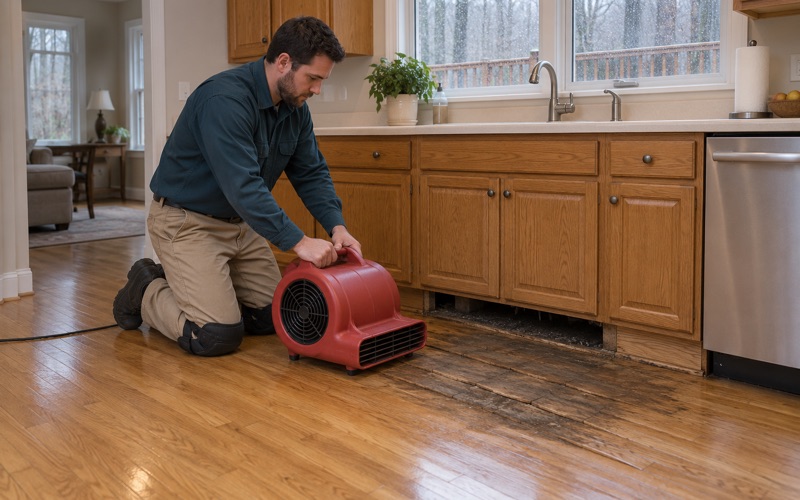
Cupping, crowning or buckling is a different matter. Those point to moisture, from a slow leak, a dishwasher line or a slab that was never read, and we trace the source with a moisture meter before we touch the surface. Sanding a cupped floor flat before it has dried out turns it into a crowned floor a few months later.
Pets, sun and rug shadows
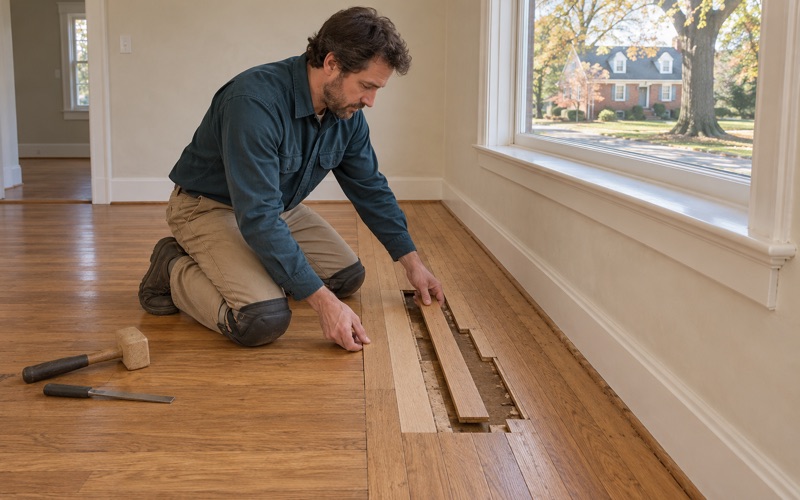
Pet urine stains, water stains at the patio door and rug shadow where furniture sat for a decade are common in homes that have had one or two owners. Light marks usually come out with sanding. Dark stains that have soaked into the wood need a board replacement woven into the surrounding rows so the repair disappears.
Refinish, Recoat or Replace a Production-Built Floor
When a screen and recoat is enough
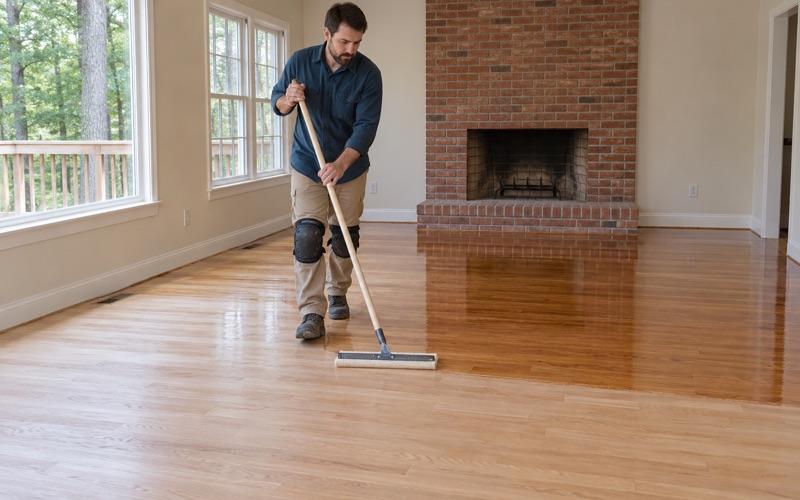
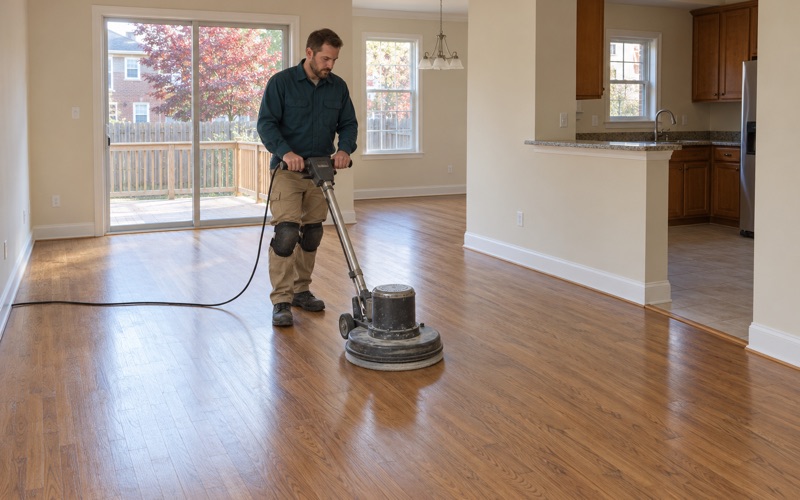
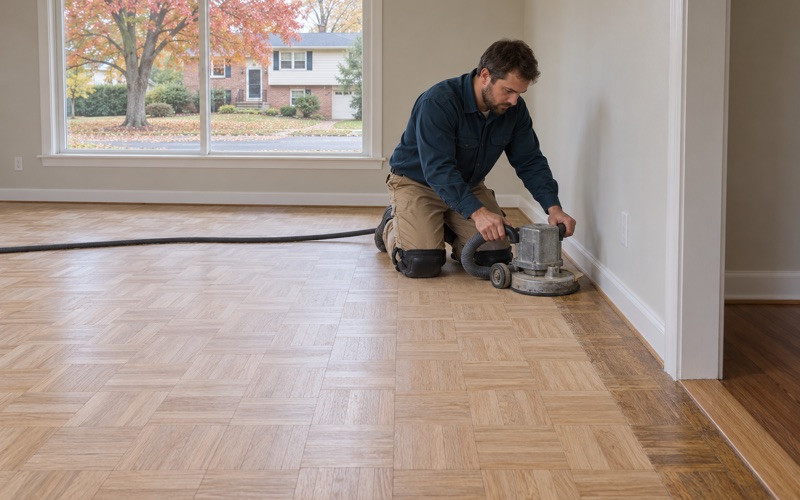
If the finish is worn but intact and the wood underneath is clean, a screen and recoat is the least invasive fix. We abrade the existing coat with an orbital sander or buffer, clean with a HEPA vacuum and apply fresh polyurethane over it. It will not remove deep scratches or change the color, but it restores protection with far less dust and downtime.
The test is adhesion. A floor that has been waxed, washed with an oil soap or treated with a shine product may reject a new coat and end up with peeling polyurethane. We check for wax residue and contamination before we recommend a recoat, and if the floor fails that check, you hear it from us before any finish goes down.
When a full sanding makes sense
A full sanding with a drum sander and a planned grit sequence is the right choice when scratches go into the wood, when a stain needs to change, or when a finish has aged into an orange oak tone. Solid hardwood generally tolerates several sandings over its life. On an engineered floor, the engineered wear layer sets the limit, so we measure what remains before committing to it.
This is also when most Fulton owners revisit the look, often moving from a glossy finish to a lower sheen level or from a warm tone to a natural one. We plan the finish around Maryland’s VOC limits for wood coatings, choosing waterborne polyurethane, oil-modified polyurethane or hardwax oil to fit the household’s tolerance for fumes and drying time.
When replacement is the honest answer
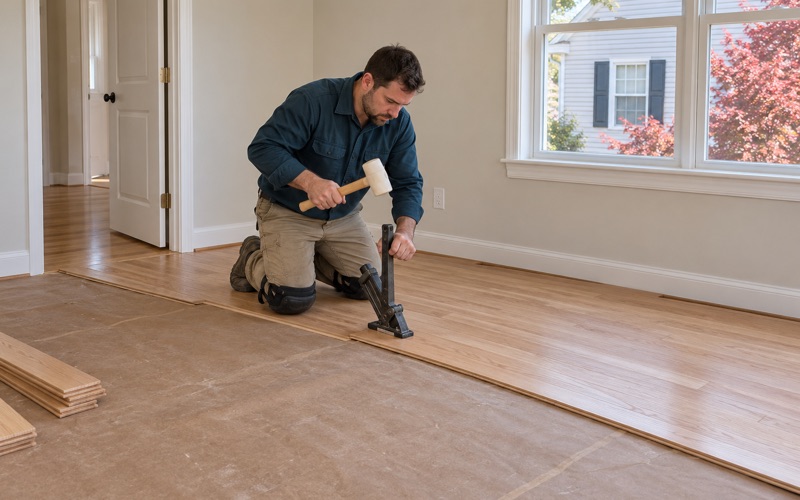
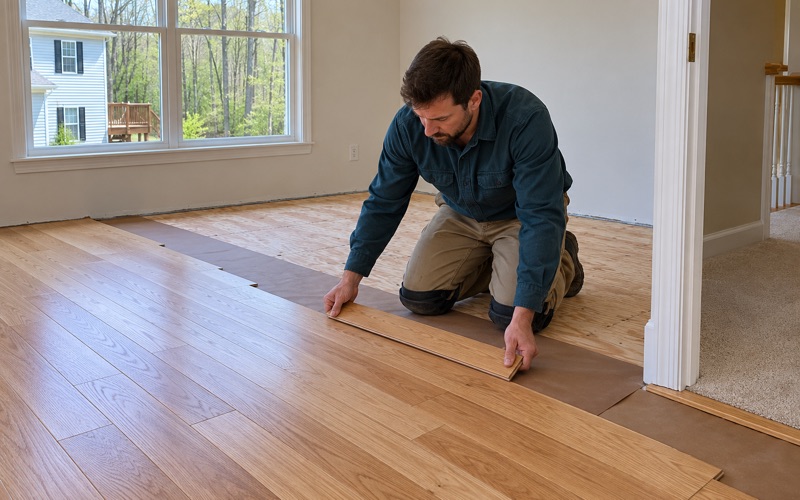
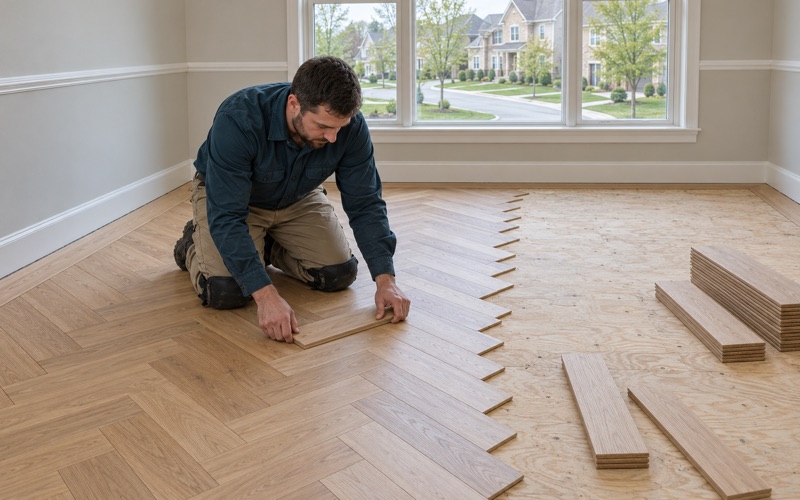
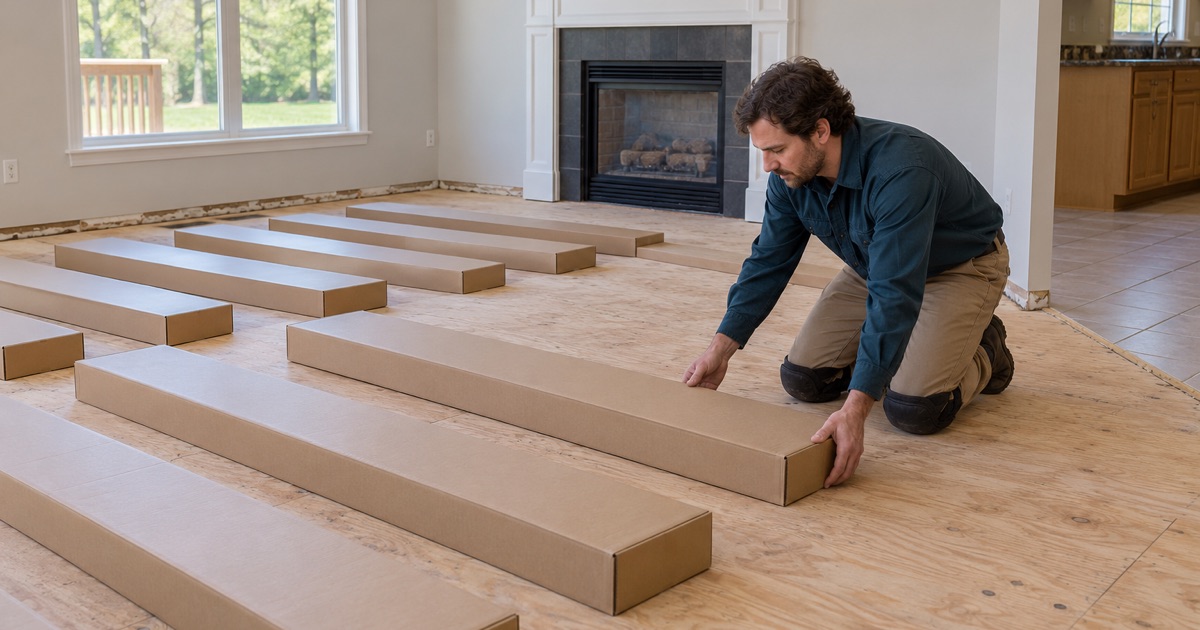
Some floors are not worth refinishing. A thin wear layer that has already been sanded, a printed or laminate surface, or widespread water damage all point toward replacement. In those cases we remove the old floor, check the subfloor and joist layout for flatness and squeaks, and install new solid or engineered wood with proper acclimation, following the NWFA Installation Guidelines.
Replacement also lets you correct choices that never suited the house. Carpet across the bedrooms, a mix of materials on the main level, or a narrow plank that shows every seam can all give way to a single floor running room to room. When carpet comes out, we pull the carpet pad and tack strip and repair the subfloor before new wood goes down.
Townhouses, Stairs and Planning an Upgrade in Fulton
Wood through a Fulton townhouse
The survey counts 729 one-unit attached homes in Fulton, nearly as many as its 749 detached houses, and many of those townhouses date from the 2010s. A townhouse floor usually runs through a long, narrow main level with the stairs near the middle, so a refinish or new floor has to be phased so the family can still get from the garage to the bedrooms.
Shared walls and stacked rooms make noise matter, and where a new floor goes over finished living space we talk through sound-reducing underlayment. Townhouse and condo work is planned around the association’s own documents, which we read with you rather than assume, so the schedule and access are settled before work starts.
Stairs priced tread by tread
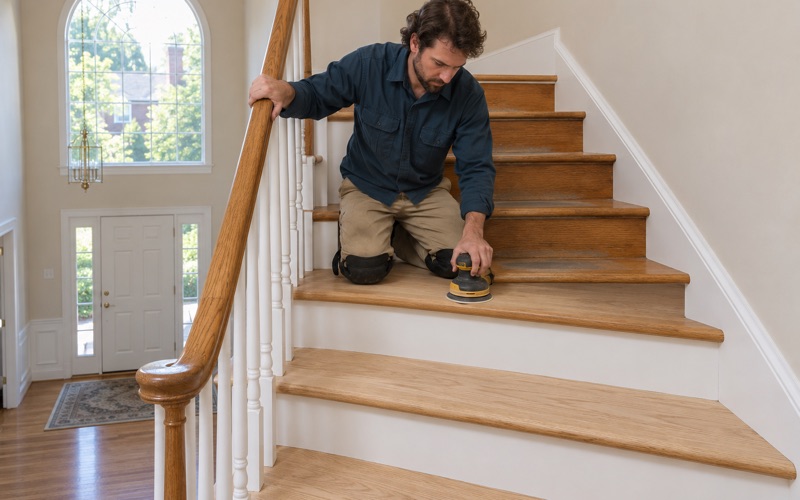
Carpeted stairs are one of the upgrades we quote most often in newer Fulton homes. Under the carpet, a stair tread can be finish-grade hardwood or a rough tread that was only ever meant to be covered. We open a step to see what is there, then quote treads, stair risers and stair nosing tread by tread, because a staircase is not priced by the square foot.
When the stairs meet a refinished or new floor, we match species and stain so the treads read as part of the same surface. We also plan the order of work so the stairs are never the only route out of a room with wet finish.
Planning the work around the household
With 79.9 percent of Fulton homes owner-occupied, most projects we plan here are for families living in the house during the work. We sequence rooms so the kitchen or a bedroom stays usable, contain dust with sealed doors and returns, and give you drying times in writing so you know when furniture can go back.
For the rented homes in Fulton, Howard County requires a rental housing license from the Department of Inspections, Licenses and Permits before a lease. We schedule turnover work tightly, and our itemized invoice gives a landlord the supporting documentation Maryland’s security deposit law asks for when floor damage is charged against a deposit.
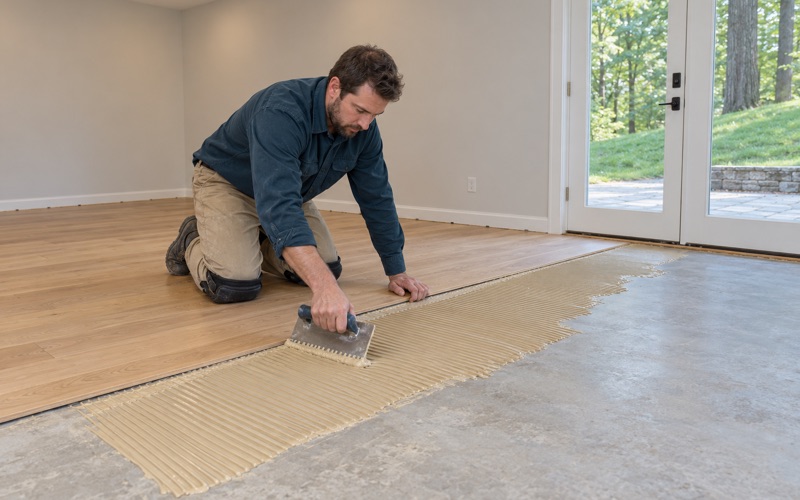
A basement in a newer Fulton home is often finished space over a concrete slab. Before any wood goes down there, we take moisture readings and look at the grade, and for a below-grade installation we may recommend engineered wood or a different floor entirely.
- 20+ Years on Wood Floors
- Written, Itemized Estimates
- Dust Sealed Into the Work Area