
Ellicott City Wood Flooring has handled hardwood floor repair in Ellicott City, MD for more than 20 years, serving surrounding cities including Catonsville, Woodlawn, Columbia, Ilchester and Milford Mill. We replace damaged boards, patch the gaps left by radiators, registers and removed walls, quiet squeaks, and fix the damage insects and moisture leave behind, in solid and engineered floors alike.
A good repair disappears. That means matching species, board width and direction, weaving new boards into the old so the joints stagger, and then blending the finish so the eye does not stop at the patch. A repair that reads as a square of new wood from across the room has solved one problem and created another.
Before we cut anything, we find out why the damage happened. A board that split from a slow leak will split again if the leak is still there, and boards replaced over active beetles will be eaten next. Every repair is quoted in a written, itemized estimate that lists each fix as its own line.
Replacing and Patching Damaged Boards
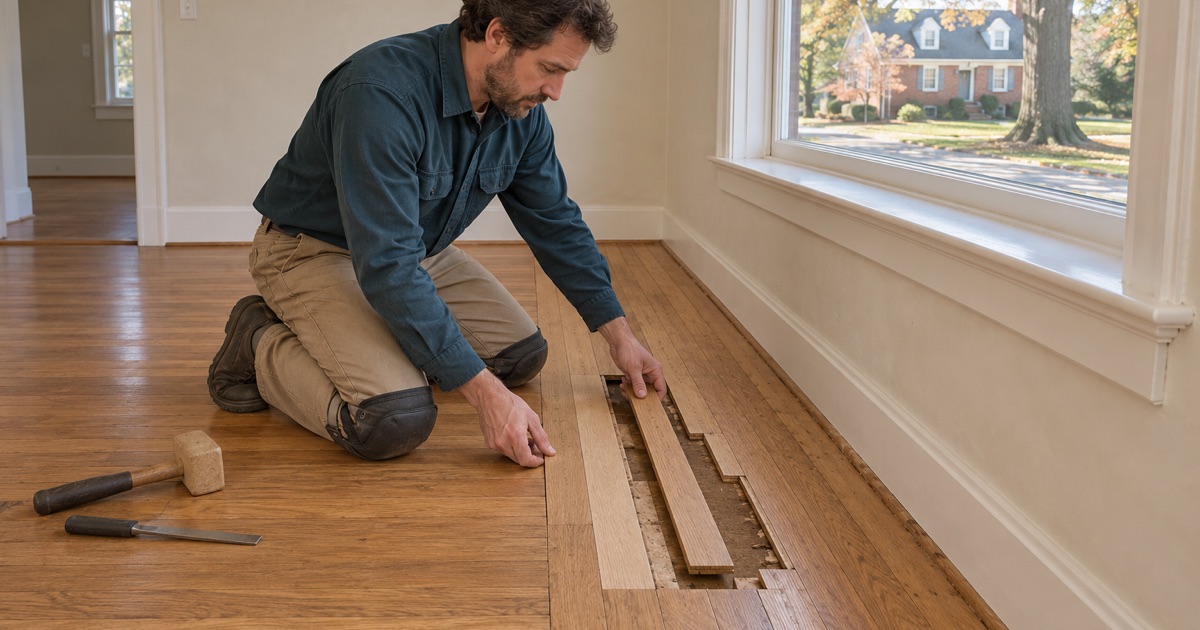
Board replacement for stains, gouges and splits
Some damage goes deeper than a sanding can reach: black pet urine stains, deep gouges from dragged furniture, burns, and boards that have split along their length. Those boards are cut out cleanly without disturbing their neighbors, and new boards of the same species and width are fitted into the opening.
We remove damaged boards in staggered lengths rather than one straight cut, so the new boards end at different points just like the original floor. Where a pet stain has reached the subfloor, we seal the subfloor before the new boards go down so the odor does not come back through.
Weave-in repairs where radiators, registers and walls came out
Removing a radiator, moving a floor register or taking down a wall leaves an opening or a strip of mismatched wood. Filling it with a single square piece is fast, but it never looks like part of the floor. We weave new boards into the existing floor, extending some rows and shortening others so the repair blends into the pattern.
When a wall comes down between two rooms whose floors ran in different directions, we plan the transition before cutting anything. Sometimes the best result is a border or a header board across the opening, and sometimes it is weaving one floor into the other.
Gaps, splinters and old pine boards
Old pine floors, including heart pine and Douglas fir in older houses, are softer than oak and often develop wide gaps and lifting splinters. We glue down splinters, replace boards that are too far gone and fill or spline gaps that have stopped moving with the seasons.
Not every gap needs filling. Winter gaps that open when the heat is running and close again in summer are normal, and filler packed into them usually cracks out or crushes the board edges. We tell you which gaps are seasonal and which are permanent before recommending any fix.
Squeaks, Loose Boards and Subfloor Problems
Squeaky floorboards and nail pops
Squeaky floorboards come from boards rubbing against each other or against fasteners that have loosened as the wood dried and shifted. Nail pops are fasteners that have worked up through the surface. Both are common in older strip floors and in builder floors that were installed with too few fasteners.
Where we can reach the underside from a basement or crawlspace, we fix squeaks from below without touching the finish. Otherwise we refasten from above with flooring cleats or trim screws, then set and fill the heads so they disappear into the floor.
Soft spots and joist problems
A spot that feels spongy underfoot usually means the subfloor has delaminated, a joist has been notched or damaged, or the floor was installed over a gap. Sanding or refinishing will not fix it. We open the area, find the cause and repair the subfloor or have the joist addressed before putting the boards back.
Soft spots near bathrooms, kitchens and exterior doors often trace back to old leaks. We read those areas with a moisture meter, because a soft subfloor that is still wet will keep failing under any new wood.
Floors that are no longer level
Older houses and rowhouses often have floors that slope or dip after decades of settling. Some of that is part of the house’s character, and some of it is a sign of a structural problem. We check how far the floor dips and whether the joists below show damage before recommending anything.
Where the slope is stable, we can usually repair and refinish the floor as it is. Where a joist needs attention, that structural repair comes first, and we coordinate the floor work around it.
Insect and Moisture Damage
Powderpost beetles and frass
Small round exit holes with a fine, flour-like powder called frass beside them are signs of powderpost beetle activity. The beetles lay eggs in the wood, and the larvae tunnel through it for some time before emerging. Fresh, light-colored frass means the infestation may still be active.
We stop and recommend treatment before any repair, because replacing boards over live beetles only gives them new wood. Once treatment is done, we remove boards too damaged to keep, check the subfloor and joists nearby, and weave in replacements.
Termite damage under the floor
Termites eat wood from the inside, so damage often shows only when a board breaks or the floor goes soft. We open the area to see how far the damage runs into the subfloor and joists, and pause the floor repair until a pest professional has handled treatment.
After treatment, damaged framing is repaired first, then new subfloor and boards go in. We match the new boards to the existing floor and refinish the area so the repair blends with the rest of the room.
Moisture-related cupping and board damage
Boards that cupped or crowned from a leak or high humidity can sometimes be saved once the moisture problem is fixed and the floor dries. We read the floor with a moisture meter to decide which boards will recover and which need replacement. Repairs made before the floor is dry rarely last.
Repairs for Rentals, Sales and Older Houses
Rental turnovers and deposit records
Landlords often need floor repairs between tenants: pet damage, deep scratches, burns and broken boards. We schedule repairs to fit the turnover window and provide an itemized invoice that separates normal wear from damage room by room. Maryland’s security deposit law, Real Property 8-203, gives a landlord 45 days to send a list of damages, and that invoice gives the supporting documentation it asks for.
In rentals built before 1978, we also plan repairs and any sanding around the lead dust test Maryland requires at each change of tenant, so the floor work is finished before the test rather than after it.
Lead-safe repairs in pre-1978 homes
Repairs in older houses often disturb painted thresholds, shoe molding or stair parts. In homes built before 1978, we confirm the build year and look at painted surfaces before starting, and plan containment and cleanup under the EPA RRP Rule when they are present.
Old tile and adhesive under the floor
Repairs sometimes uncover old resilient floor tile or black mastic beneath carpet or a newer floor. Those materials can contain asbestos, so we stop and have them identified before anything is cut, sanded or scraped, and leave their removal to the trade qualified for it.
- 20+ Years on Wood Floors
- Written, Itemized Estimates
- Dust Sealed Into the Work Area