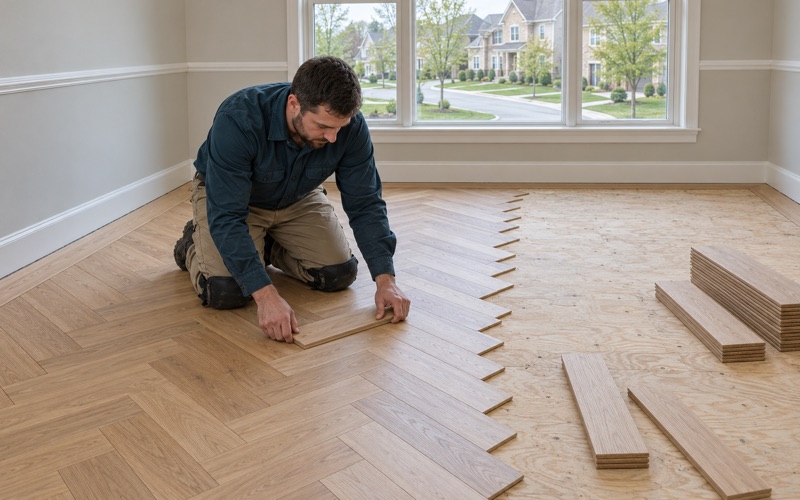
Ellicott City Wood Flooring has handled wood-flooring in Lansdowne for more than 20 years, from sanding and refinishing worn oak to board replacement, stair work and new installation. Most jobs here start in a house older than the people living in it, and that shapes nearly every step we take before a sander touches the floor.
We read the build year first. A house from before 1978 falls under lead-safe renovation rules, so painted baseboards, old thresholds and any coated trim are checked before we plan the grit sequence. If the floor sits under carpet or tile, we find out what is below before we call any quote final.
Every estimate we hand over is written and itemized, so an owner can file it for an insurer or a future sale and a landlord can keep it with the unit’s records. The sections below cover what is different about floor work in Lansdowne’s houses and how we plan around it.
Riverview’s Developments and the Houses They Left Behind
Housing and schools built together
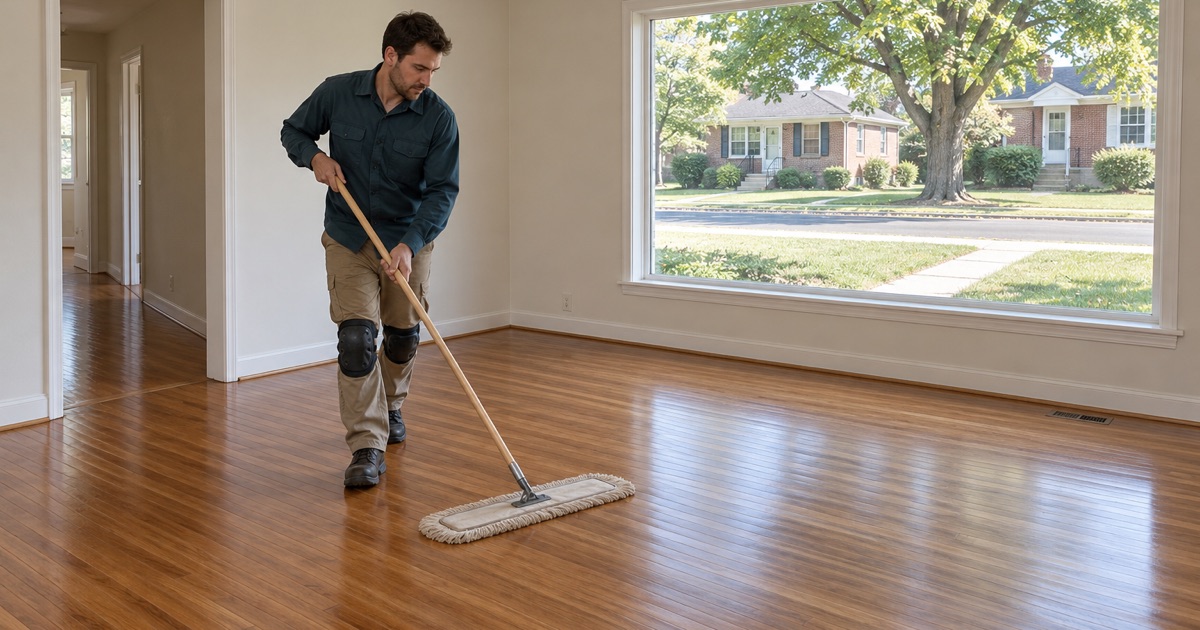
The one Lansdowne neighborhood its local history names is Riverview. In the 1950s, as Wikipedia puts it, housing developments sprang up in the Riverview area, and new schools were built for these neighborhoods. That pairing shows how fast the area filled in: whole developments arrived at once, and the schools followed the families who moved into them.
Those decades still dominate the housing stock. Census figures for the Lansdowne CDP show 1,046 homes built between 1950 and 1959 and another 749 from the 1960s, together 51.7 percent of every unit in the place. Lansdowne was once known as a B&O town, but most of the floors we walk on here date from the building surge that came later. That concentration is why the same handful of problems shows up in house after house.
What that era means under a sander
A floor laid in the 1950s or 1960s has usually been through several rounds of wear, covering and partial repair. We look for traffic lanes worn through the finish, rug shadow where furniture sat for decades, and wax residue from years of old-style maintenance, because wax has to come off completely or a new polyurethane will not bond.
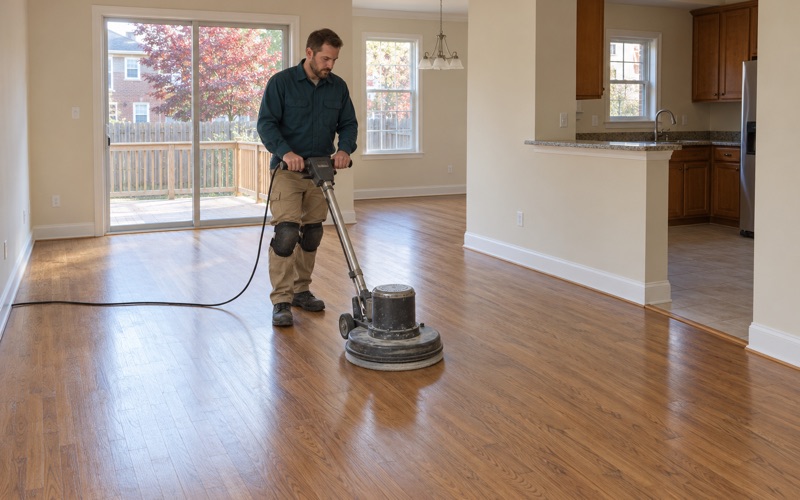
We also check how much wood is left above the tongue before committing to a full sand. Narrow oak strip that has already been sanded more than once may have room for a single careful pass, or it may be a better candidate for a screen and recoat. Lifting a floor register or looking at a threshold edge usually answers that question in minutes.
Pre-1980 houses and lead-safe work
ACS data puts 84.1 percent of Lansdowne’s housing units before 1980, which means most houses here predate the 1978 cutoff for lead-based paint. Floors themselves are rarely painted, but baseboards, shoe molding, stair risers and door casings often are, and sanding beside them raises dust that has to be controlled.
Where the build year calls for it, we work under the EPA RRP Rule with dust containment, sealed doors and returns, and a HEPA vacuum between grit passes. It adds setup time, and we put that time on the estimate instead of discovering it halfway through the job. Cleanup is checked before we leave each day, not only at the end.
Looking for wood-flooring closer to Owings Mills? See Wood-Flooring Services in Owings Mills.
Attached and Detached Houses in Riverview-Era Lansdowne
More attached homes than detached
Lansdowne has more one-unit attached houses than detached ones: 1,603 attached against 1,185 detached, according to the ACS 2024 5-year estimates. That split changes the job more than people expect, because a shared wall affects how sound travels, where dust goes and how materials come through the door. It also limits staging space, since equipment often comes through a single front door and a narrow hall.
In an attached house, a drum sander running on one side of a party wall is audible on the other. We tell clients that up front so they can warn the neighbor, and we schedule the loudest work for ordinary daytime hours. Where an association governs the property, we read its own documents for work hours and flooring rules rather than guess at them.
Detached houses and their own quirks
Detached houses give us more room to stage equipment and more freedom on timing, but they bring their own issues. Older detached homes often have floors that run continuously from room to room, so a stain choice in the living room carries into the hall and bedrooms whether that was the plan or not. Split-level layouts add short stair runs between levels, each with its own nosing to match.
We lay stain and sheen samples directly on the floor before anyone chooses a color. Red oak strip flooring takes stain differently from white oak or maple, and an orange oak look that seemed permanent can turn out to be a few coats of amber oil-modified polyurethane rather than the wood itself.
Underlayment, subfloor and sound
Where an attached-house owner wants new flooring rather than a refinish, sound becomes part of the specification. A sound-reducing underlayment under engineered or floating flooring can soften footfall noise through a shared wall or ceiling, and an association’s rules may call for it in writing. We check those documents for any stated rating before ordering material.
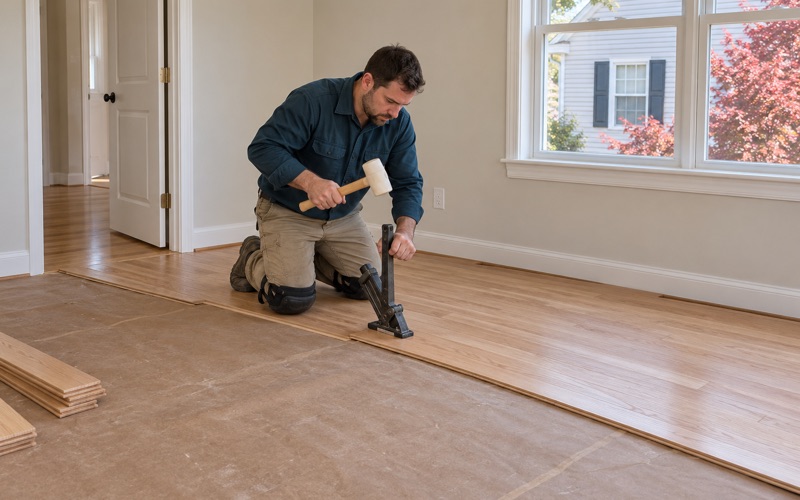
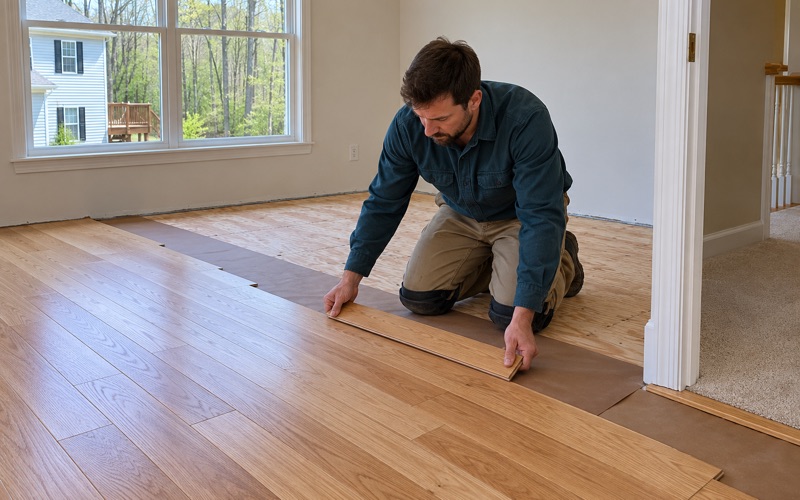
Before anything goes down, we check the subfloor for loose sheathing, squeaky floorboards and nail pops over the joists. Fixing those first costs far less than chasing them through a finished floor later, and it keeps new tongue and groove boards from moving once they are fastened with flooring cleats.
Owner and Renter Attached Houses: Different Floor Decisions
Owners in both house types
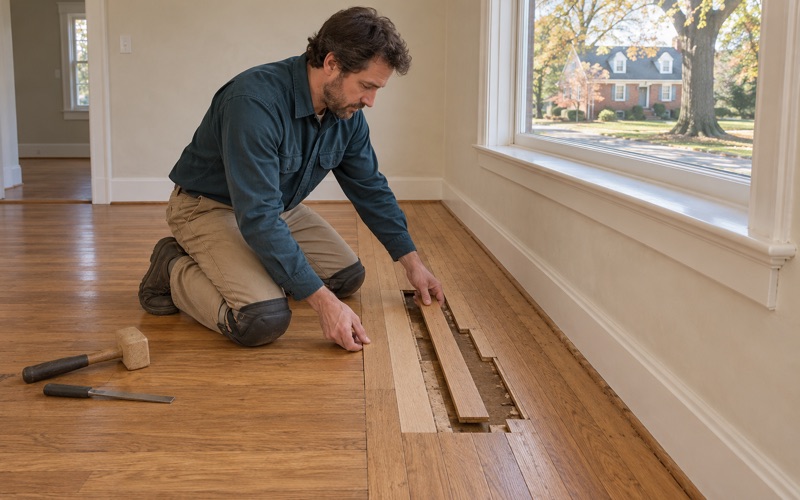
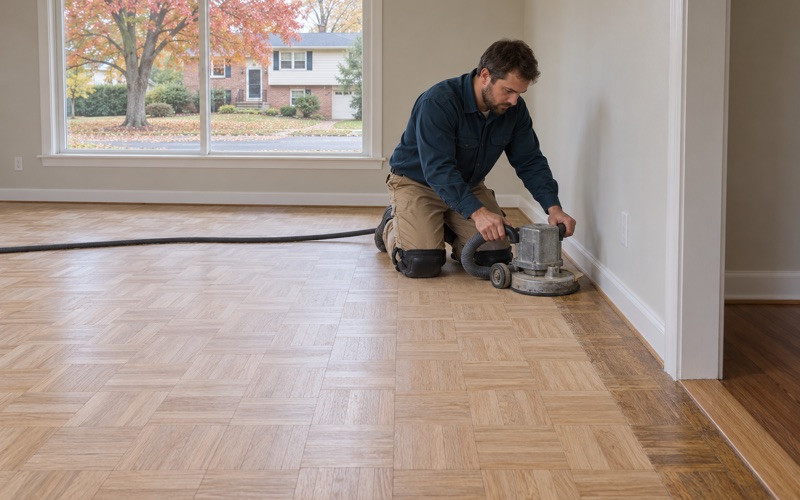
Owners in Lansdowne live in both kinds of house: 1,011 owner households in detached homes and 688 in attached ones. An owner planning to stay usually wants the deepest fix the floor can take, whether that means a full sand to bare wood, a weave-in repair where an old wall or radiator came out, or replacing boards ruined by pet urine stains. Herringbone or parquet sections, where they turn up, get hand work at the edges that a drum sander cannot reach.
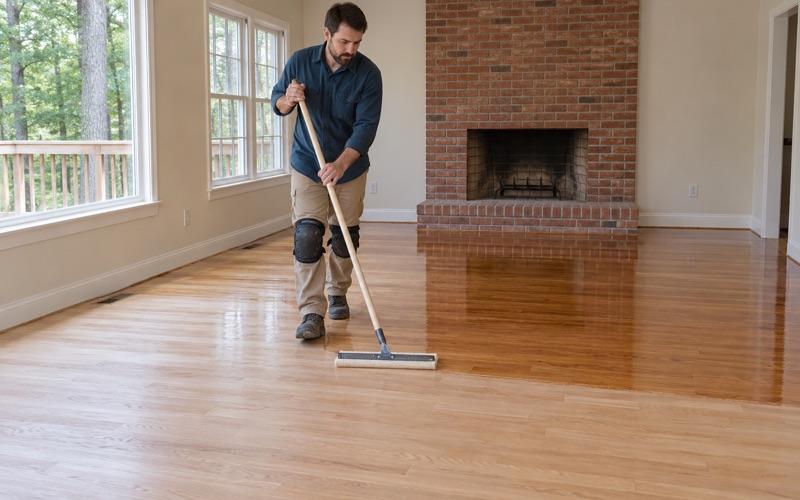
Owners also tend to ask how long a finish will last. Waterborne polyurethane dries faster and stays clearer, oil-modified polyurethane ambers and takes longer to cure, and a hardwax oil is easier to spot-repair later. We plan the choice around Maryland’s VOC limits for wood coatings and around how long the household can stay out of the rooms.
Renters and the landlords who own their floors
Renters here mostly live in attached houses: 746 renter households in one-unit attached homes, compared with just 67 in detached ones. Across all housing, 43.0 percent of Lansdowne’s occupied units are renter-occupied, so a good share of our calls come from landlords working between tenants. Those calls usually come with a deadline set by the next lease, not by the floor.
For a pre-1978 rental, Maryland requires a lead dust test at each change of tenant, and we build the floor schedule around that test rather than racing it. Sanding has to finish and cleanup has to be complete before the unit is tested, so we agree on the dates with the landlord before we start.
Paperwork a landlord can use
Between tenants, the question is often how much floor damage counts against a deposit. Our itemized invoice separates normal wear, such as traffic lanes and light board gapping, from damage like deep water stains or pet urine that went through the finish into the wood.
That breakdown gives a landlord the supporting documentation Maryland’s security deposit law, Real Property 8-203, asks for. We describe the condition and the work we did; the deposit decision stays with the landlord. Photos taken at the start of the job sit alongside the line items, so the record shows the floor before and after.
What Lies Under the Covering, and Planning the Work
Carpet, tile and mastic
Many Lansdowne floors spent decades under wall-to-wall carpet. Pulling it usually leaves tack strip holes around the perimeter, staples from the carpet pad, and sometimes paint drips that were never cleaned up. All of that sands out, provided enough wood remains above the tongue.
Older resilient floor tile is a different matter. Tile and the black mastic beneath it from this era can contain asbestos, so we identify it before any sanding and leave removal to the trade licensed for it. We do not grind or sand through mastic to reach the wood below. Where tile has to stay put, we can recommend covering it with a new floor rather than disturbing it.
Water, insects and moisture
Under coverings we also find old water stains near kitchens, baths and exterior doors, and occasionally cupping or crowning where moisture got into the boards. We trace the source, dry it, and confirm the readings with a moisture meter before any repair. If an insurer is involved, we document the damage room by room for the adjuster.
Small exit holes and fine powder called frass can point to powderpost beetle activity, and soft, hollow boards near a sill may mean termite damage. We flag both and recommend the right specialist before replacing boards, since new wood laid over an active problem will not last.
Basements, stairs and scheduling
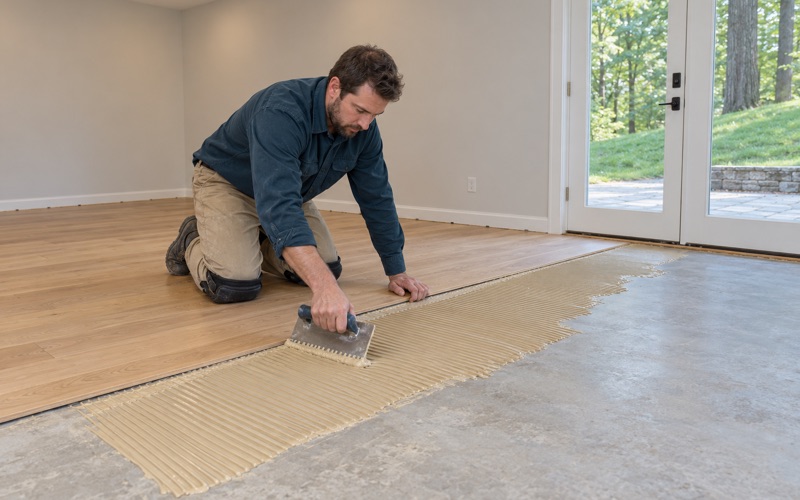
In a finished basement we take moisture readings on the concrete before recommending anything. Solid hardwood is a poor fit below grade, so after reading the moisture and the grade we usually suggest engineered flooring with a suitable wear layer, or a different floor entirely. A working sump pump and a slab that stays dry through the seasons both matter before we commit to a material.
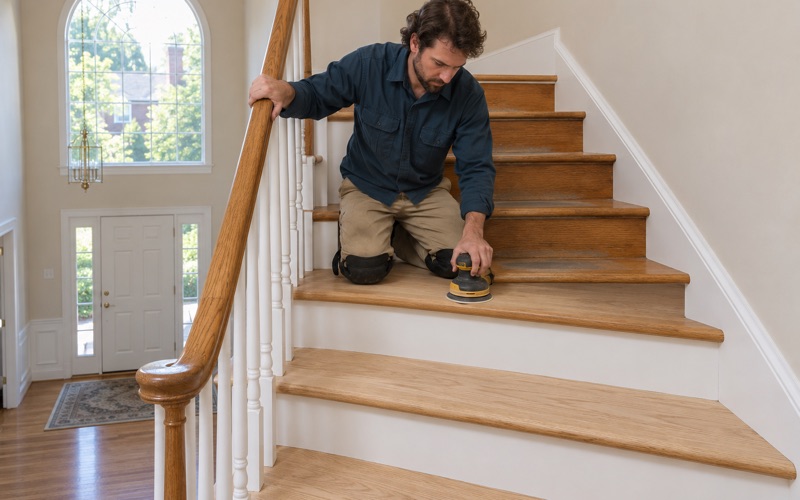
Stairs are quoted tread by tread, with nosing and risers priced on their own, because a staircase does not fit a square-foot rate. Before work starts, every client gets a written timeline showing when the floor can take socks, then furniture, then rugs, so the household can plan the days around it.
If the work is part of a sale or a turnover, we can phase rooms so part of the house stays usable while the rest cures. Tell us the deadline at the first visit and we will say plainly whether the floor can meet it.
- 20+ Years on Wood Floors
- Written, Itemized Estimates
- Dust Sealed Into the Work Area