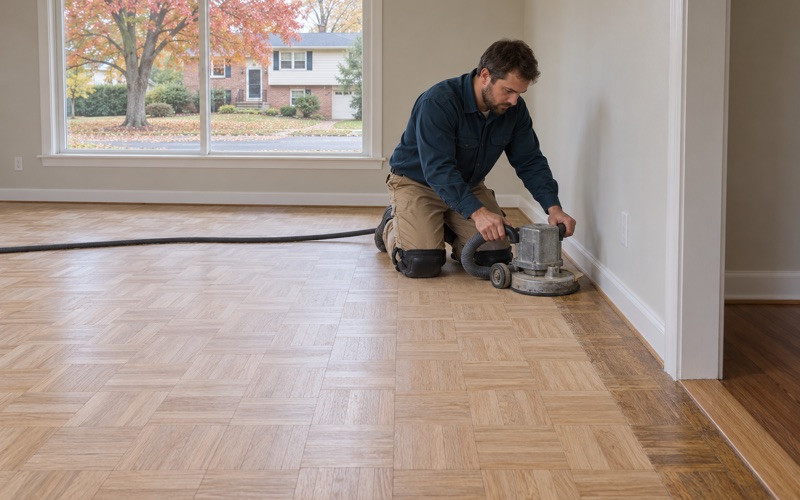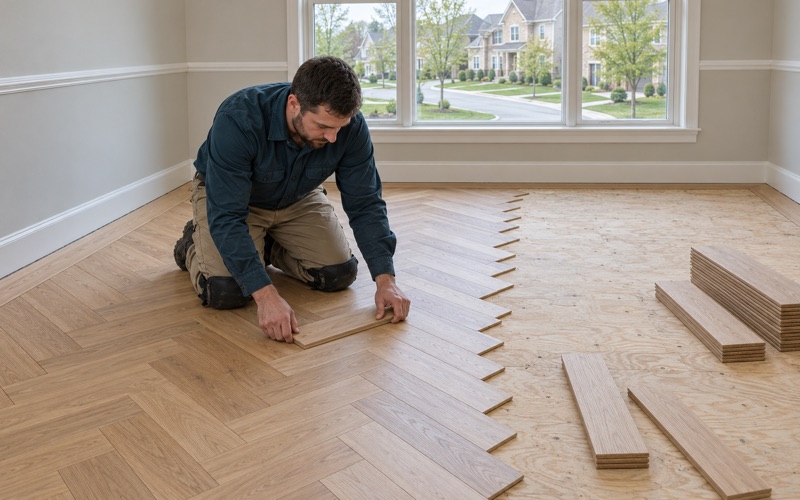
Ellicott City Wood Flooring has spent more than 20 years on wood flooring in Randallstown and the surrounding part of Baltimore County, and most of what we are asked to do here comes down to one question: how do we make the floors better without making the house harder to live in? We refinish worn oak, rebuild tired stair treads, repair the edges where one floor meets another, and plan every job around the people who will still be sleeping in the house that night.
That planning starts before any machine comes through the door. We note the year the house was built, check any painted trim or old finish we may disturb, and walk the rooms with you to decide which ones can be emptied first. Then you get a written, itemized estimate that breaks the work into stages you can follow, keep in a file and question line by line.
We would rather do a smaller job well than a whole-house job that leaves you camping in the kitchen for a week. Plenty of our Randallstown work is a single hallway, a set of stairs or one bedroom at a time, and we price it that way rather than pushing everything into one visit.
Randallstown’s Long-Tenured Homeowners and Their Floors
A Community That Stays Put
Randallstown is a census-designated place in unincorporated Baltimore County, so the county itself is the local government. It began as a tollgate crossroads on the Liberty Turnpike, named for the tavern-keepers Christopher and Thomas Randall, and today it is a settled suburb of Baltimore with 33,655 residents counted in 2020. What stands out for floor work is how many people here own and how long they have stayed.
According to the Census Bureau’s 2024 five-year estimates, 73.9 percent of Randallstown households own their home. Among those owner households, 68.1 percent are headed by someone 55 or older, 39.6 percent by someone 65 or older, and 1,636 by someone 75 or older. Those are not people shopping for a starter house; they are people deciding how to keep the one they have.
What That Means for the Work
An owner who plans to stay ten more years asks different questions than one getting ready to list. The priority is usually comfort and footing: a floor that does not catch a slipper, a stair that does not flex, and a finish that does not need fussing over. Looks matter too, but they rarely come first.
It also changes how we schedule. A homeowner in their seventies may not be able to move furniture, may not want to stay with family for days, and may have medical equipment or a favorite chair that cannot leave the main floor. We build the plan around those facts from the first visit rather than discovering them on the morning we arrive.
Houses From the 1960s and 1970s
The same estimates count 3,249 homes built in the 1960s and 2,596 in the 1970s, which puts 5,845 Randallstown houses in that twenty-year stretch. The median year built is 1972, and the housing stock is mostly detached houses with a solid share of attached ones. We do not assume what is under the carpet in any of them; we lift a corner and look.
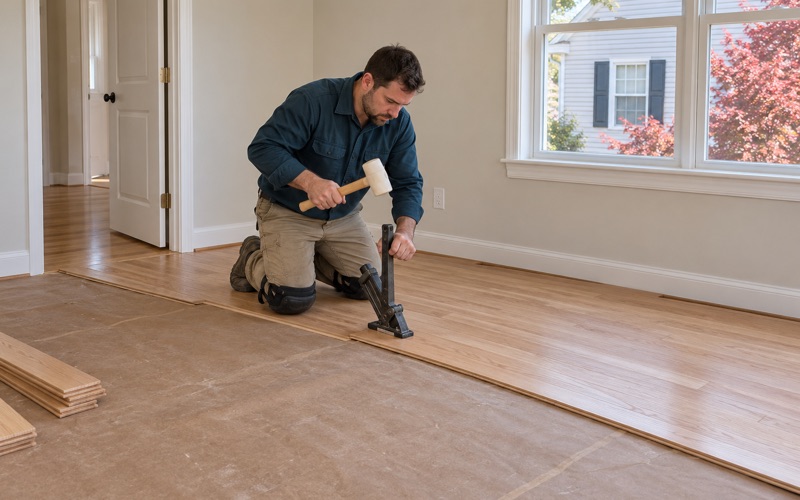
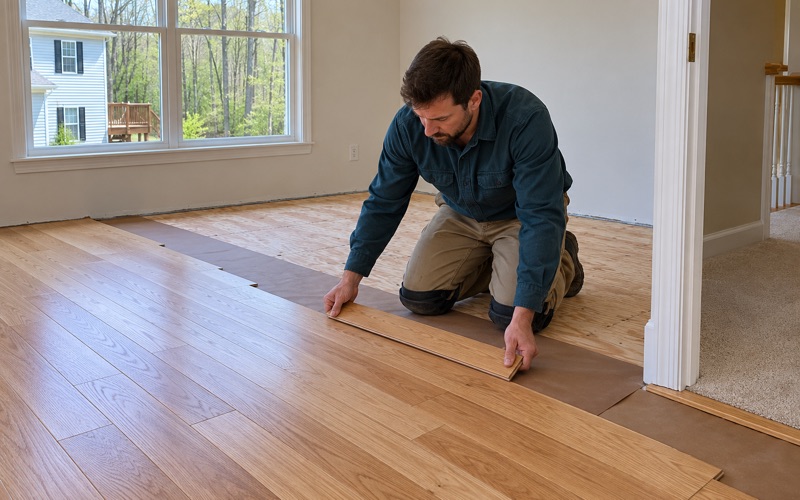
When we do find wood, it is often red oak strip flooring nailed tongue and groove over a plank or plywood subfloor, sometimes with years of wax residue, traffic lanes in the hallway and a crisp rug shadow where furniture sat for decades. Some rooms carry resilient floor tile or black mastic from an earlier remodel, and we identify that before anything is sanded and leave it for the right trade. Because every house built before 1978 falls under lead-safe renovation rules, the build year and any painted surfaces are checked before the first pass of the drum sander.
Looking for wood-flooring closer to Elkridge? See Wood-Flooring in Elkridge.
Thresholds, Transitions and Stair Treads
The Places Where Feet Catch
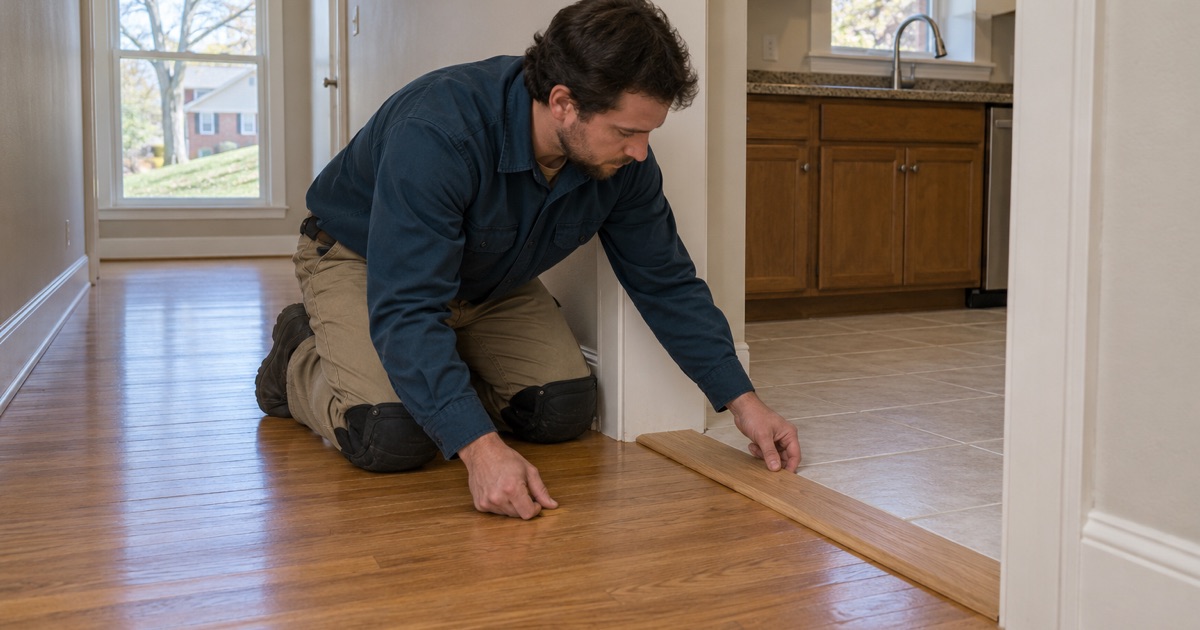
Most trips inside a house do not happen in the middle of a room. They happen at doorways, where a raised oak threshold meets a lower tile floor, or where carpet was pulled and a tack strip line or a gap was left behind. In a house that has had forty or fifty years of piecemeal updates, those edges multiply.
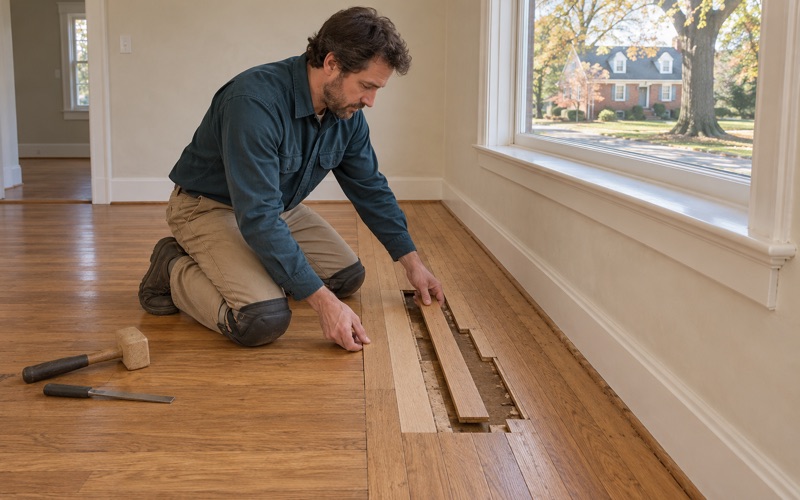
We look at each one with you: the step from the living room into the kitchen, the lip at the bathroom door, the strip where an old wall came out. Often the fix is a lower-profile reducer or a flush transition piece cut and fitted to the actual heights on each side. Where a register or an old wall left a hole in the field, we weave replacement boards into the floor so there is no patch to stub a toe on.
Loose Boards, Nail Pops and Squeaks
A squeaky floorboard is a nuisance, but a board that moves underfoot is a balance problem. We find the source, which may be a loose fastener over a joist, a gap in the subfloor or a cleat that has worked free, and secure it from above or below before any finish work. Nail pops get set and filled rather than sanded over and left to rise again.
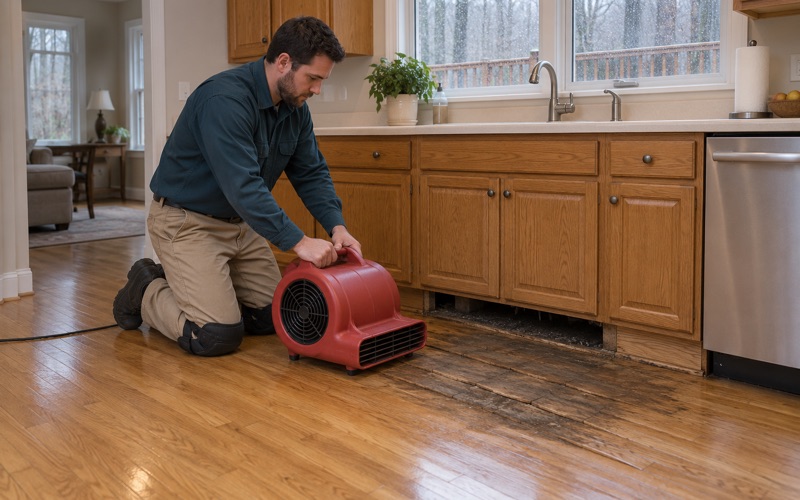
Where boards are cupped, crowning or showing water stains, we take moisture meter readings first, because refinishing a floor that is still taking on moisture only buys a few months. A single cracked or rotted board gets a proper board replacement woven into the surrounding rows.
Stairs Quoted Tread by Tread
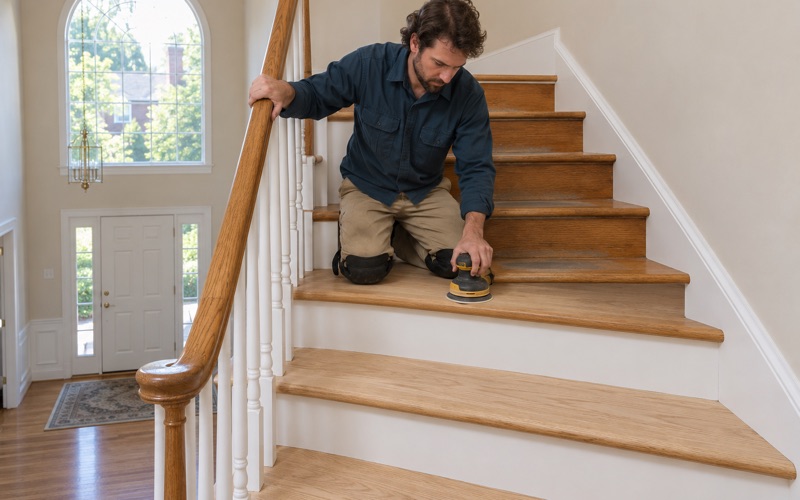
For many owners the staircase is the part of the house they think about most. Worn stair nosing, a loose tread or a riser that has split are all things we repair individually, and we quote each tread rather than pricing a staircase by the square foot, because each one is its own small job.
When carpet comes off a staircase, we check what is underneath before promising a finished wood stair: some treads were built to be covered and are not worth exposing. If they are sound, we sand, stain and finish them to match the floor at the top and bottom. If they are not, we can replace treads in solid hardwood so the run feels firm under every step.
Refinishing Room by Room While You Live There
Splitting the House Into Phases
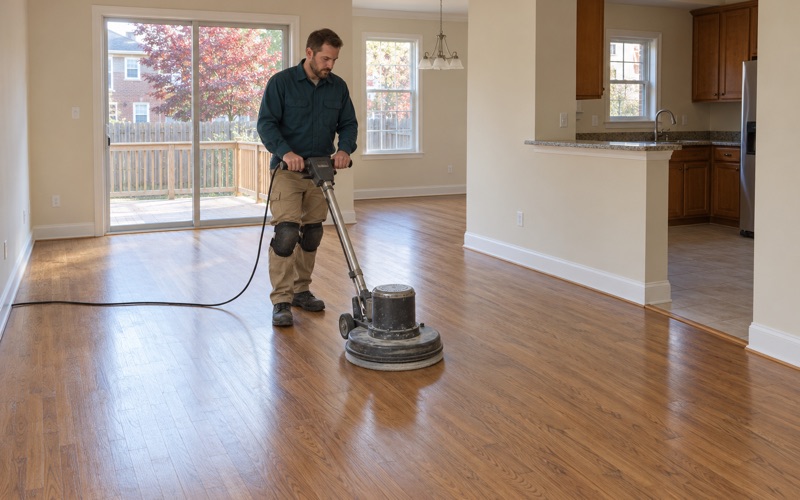
A whole-house refinish usually means emptying every room at once. For an owner who is staying in the house, we often split the job instead: bedrooms first while the living room stays usable, then the living spaces while the bedroom is back in service. Each phase is sanded, stained and finished as a complete unit.
We keep a clear path to the bathroom, the kitchen and the front door through every phase. If there is only one bedroom on the main level, we plan around it rather than asking you to climb stairs to sleep. A phase may take a little longer overall, but nobody is displaced.
Dust, Fumes and Drying Time
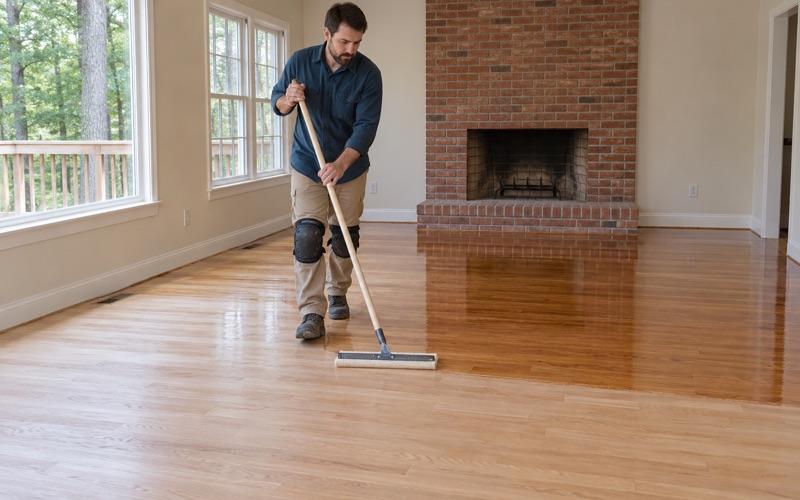
Dust stays in the rooms being worked on, with doors and returns sealed and a HEPA vacuum running alongside the sanders. We work through a grit sequence on the drum sander and finish with an orbital sander at the edges, so there is less hand scraping and less fine dust drifting down the hall.
Finish choice matters when someone is home all day. We select coatings that fit Maryland’s VOC limits for wood coatings and plan the fume and drying times around your household. A waterborne polyurethane usually lets a room return to service sooner than an oil-modified polyurethane, and a hardwax oil is easier to touch up in one spot later, so we explain the tradeoffs before you choose.
Choosing a Color You Can Live With
Orange oak from a 1970s finish is one of the most common things owners want gone. Rather than describing stain colors in the abstract, we lay stain and sheen samples on your own floor so you can see them in your own light, morning and evening, before anything is applied to the whole room.
Sheen level makes a practical difference too. A lower sheen hides scuffs, dust and wear better than a high gloss and tends to look calmer in a room with large windows. Where the existing finish is only dull rather than worn through, a screen and recoat can freshen it without full sanding, which means a shorter, quieter job.
Planning the Work, and Where Baltimore County’s Senior Repair Program Fits
Where BCAUSE Comes In
Baltimore County’s Department of Aging runs BCAUSE, Baltimore County Age-Friendly Upgrades for Seniors, with Civic Works, Rebuilding Together Baltimore and CHAI. The program was piloted in 2020 and established in 2021, and it has served 480 older-adult households across the county. Eligibility, as published, is a Baltimore County homeowner who is 65 years or older and is at or below 50 percent of area median income.
The repairs the program lists are roof, plumbing, electrical and heating work, plus safety modifications such as grab bars, stair rails and assistive devices. Flooring is not named in anything we have read about the program, so we never tell a client it will cover refinishing or floor repair. If a stair rail or grab bar is part of your plans, ask the county about BCAUSE directly, and we will schedule our floor and stair work so it fits around whatever that program installs.
What We Need From You Before We Start
A good plan begins with a walk-through. We want to know which rooms you use daily, where you sleep, whether anyone in the house uses a walker or wheelchair, and whether pets will be home. We also ask about past water leaks, a damp finished basement or anything else that might explain the cupping or stains we see.
From there, the written estimate lists every room, every stair tread and every transition as its own line, with the phase it belongs to. You can keep that document for an insurer, for your own records or for whoever handles the house later, and you can drop or reorder any line without renegotiating the whole job.
Keeping the House Working Through the Job
We confirm the order of rooms the day before each phase, move only what we have agreed to move, and put furniture back once a finish has cured enough to take it. Felt pads go under chair and table legs before anything returns to a refinished room.
When the last phase is done, we walk the house with you again, step by step across every threshold and up every stair. If a transition still catches a toe or a tread still gives, it goes back on the list before we call the job finished.
- 20+ Years on Wood Floors
- Written, Itemized Estimates
- Dust Sealed Into the Work Area