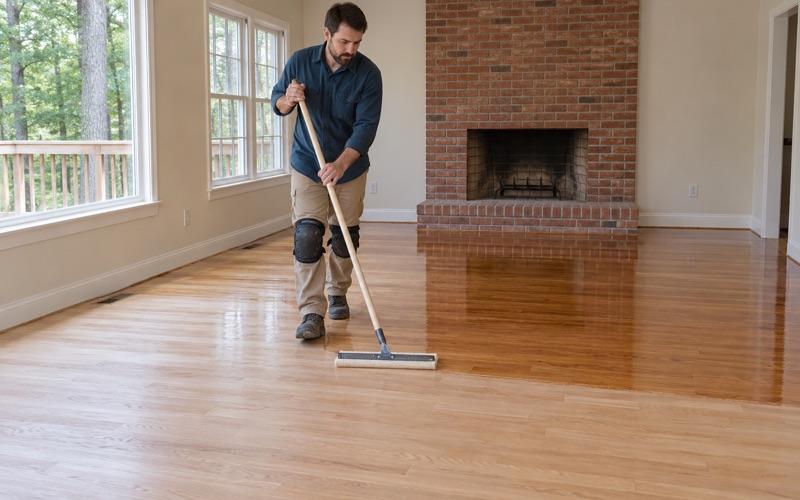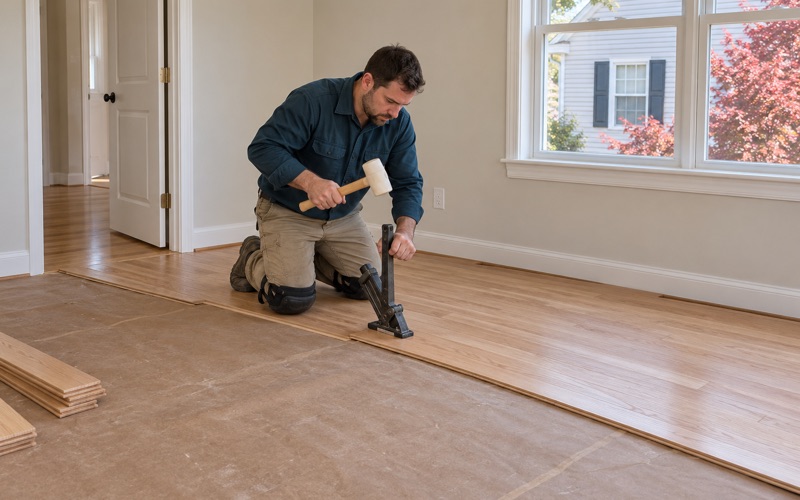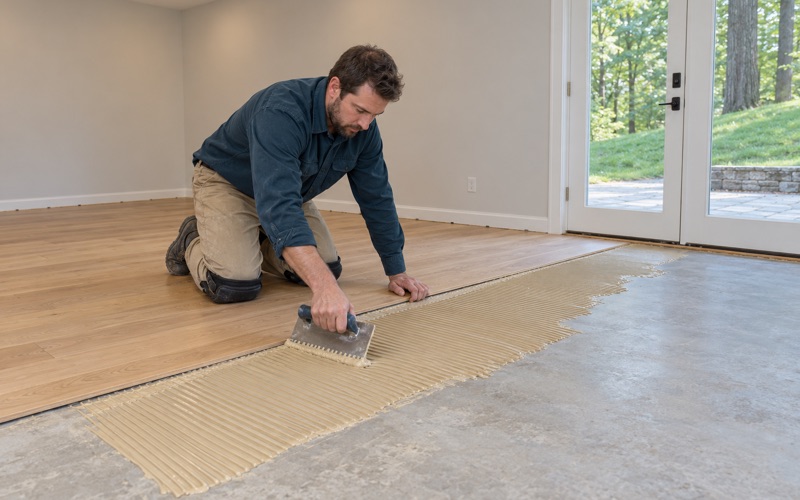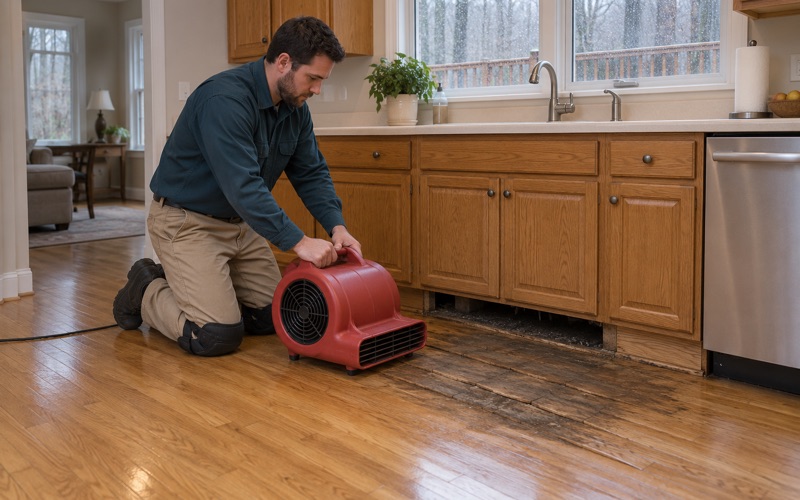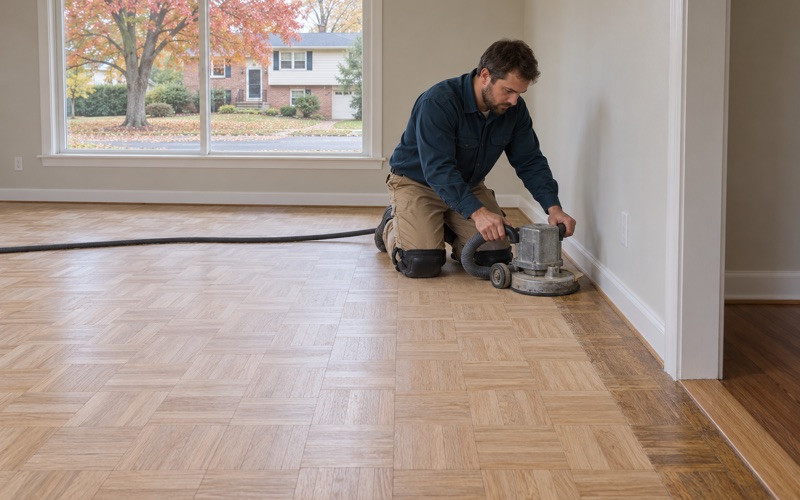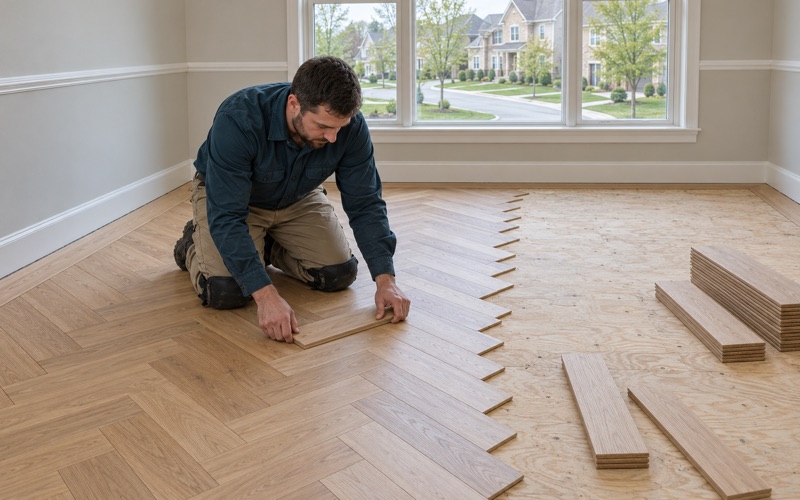
Ellicott City Wood Flooring brings more than 20 years of hands-on work to wood-flooring in Sykesville, from sanding tired oak back to bare wood to installing new solid hardwood and rebuilding worn stair treads. Most of the floors we see here went down within a short stretch of years, so the problems repeat in a way that makes them easier to read: gray traffic lanes, peeling polyurethane at the doorways, and nail pops where carpet was pulled up.
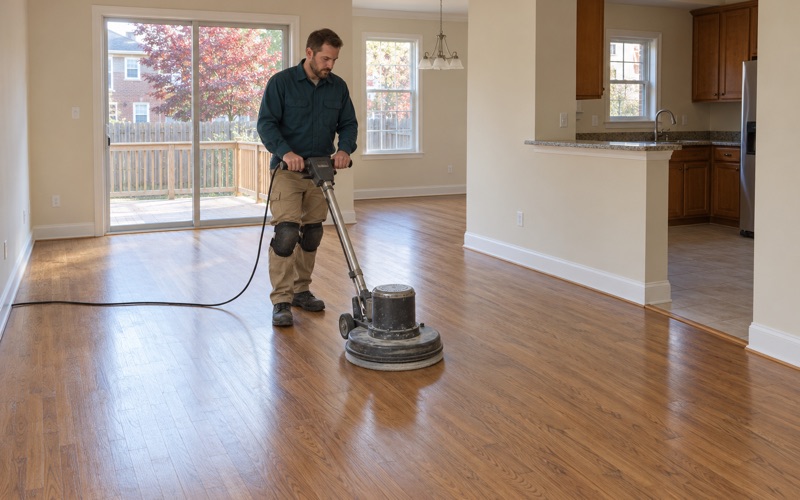
We refinish, repair, replace and install. That covers screen and recoat jobs for a finish that is dull but intact, full sanding with a drum sander and an orbital sander through a proper grit sequence, board replacement and weave-in repair, water damage drying and documentation, and stairs priced tread by tread rather than by the square foot.
What sets this town apart is less about the wood and more about the paperwork around it. Sykesville runs its own approvals on top of the county’s, and a floor project that grows into walls, wiring or plumbing can pick up a permit question along the way. We help you sort that out before a sander ever comes off the truck.
Sykesville’s 1980s and 1990s Homes and Their Floors
A housing stock built mostly in 2 decades
The Census Bureau’s 2024 American Community Survey five-year estimates count 1,597 housing units in the Town of Sykesville. Of those, 538 were built in the 1990s and 488 in the 1980s, which puts 64.2 percent of the town’s homes in that span. Fewer than 200 units date from 2000 onward, and the older houses near the historic core are a small share of the total.
That concentration shapes nearly every estimate we write here. Homes from that era tend to share builder habits, finish choices and wear patterns, and a floor that has carried several decades of family traffic usually needs the same few decisions: whether there is enough wood left to sand, whether the stairs match, and whether the original finish has turned the oak a deep amber.
What went down in that era, and how it ages
Many of these houses got red oak strip flooring in the foyer, hall and dining room, with wall-to-wall carpet over a plywood subfloor in the bedrooms. The oak was usually site-finished with oil-modified polyurethane, which ambers over time into the orange oak tone a lot of owners now want to move away from. Sanding it to bare wood and choosing a waterborne polyurethane or a hardwax oil is how that color changes.
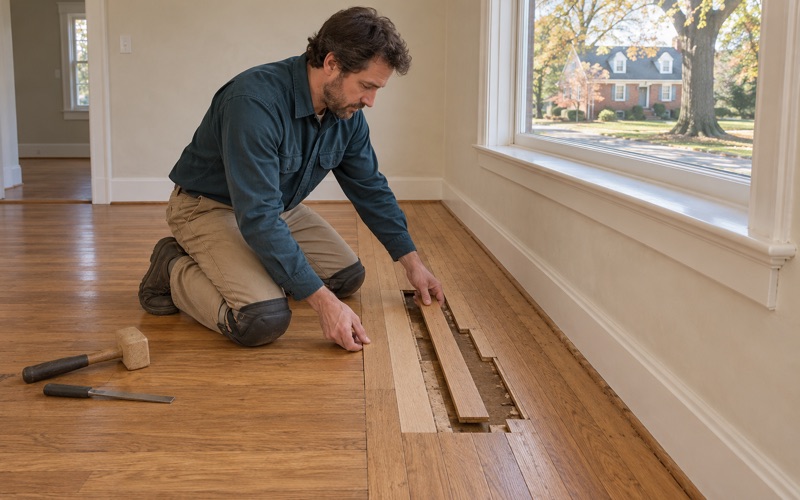
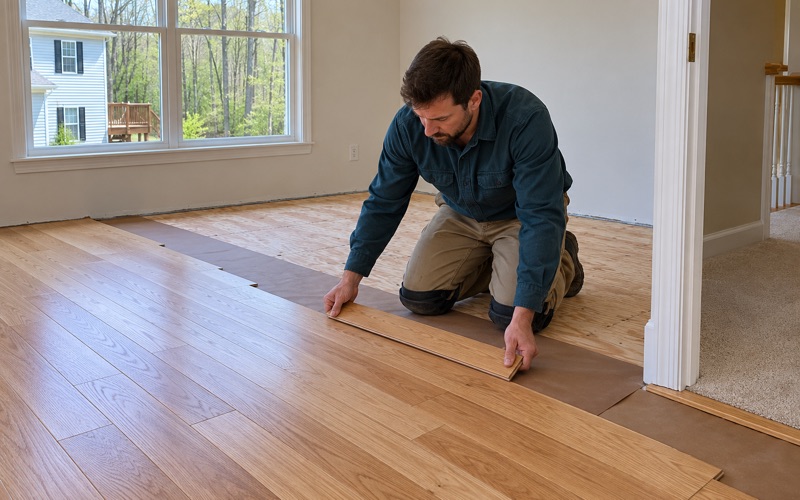
When carpet comes up, we find tack strip nailed along the walls, staples from the carpet pad, and sometimes a strip of hardwood hiding underneath that nobody knew was there. Each of those changes the quote. We pull the tack strip, fill the holes, check the subfloor for squeaky floorboards and loose spots, and then decide whether to weave new boards into the old floor or run new flooring through the room.
Townhouse floors and shared walls
The same ACS estimates count 503 one-unit attached houses in Sykesville, or 31.5 percent of the town’s housing, and 340 owner households live in them. Nearly 1 home in 3 shares a wall with a neighbor, which affects how we stage the work, where the dust goes, and what kind of noise a new floor carries.
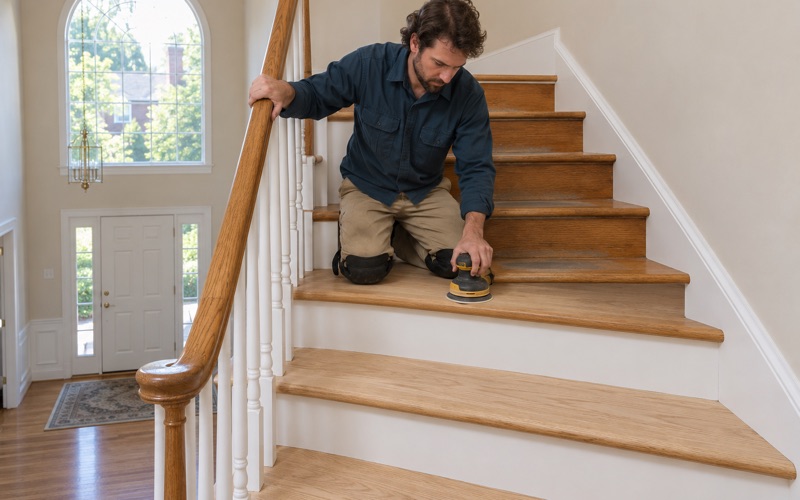
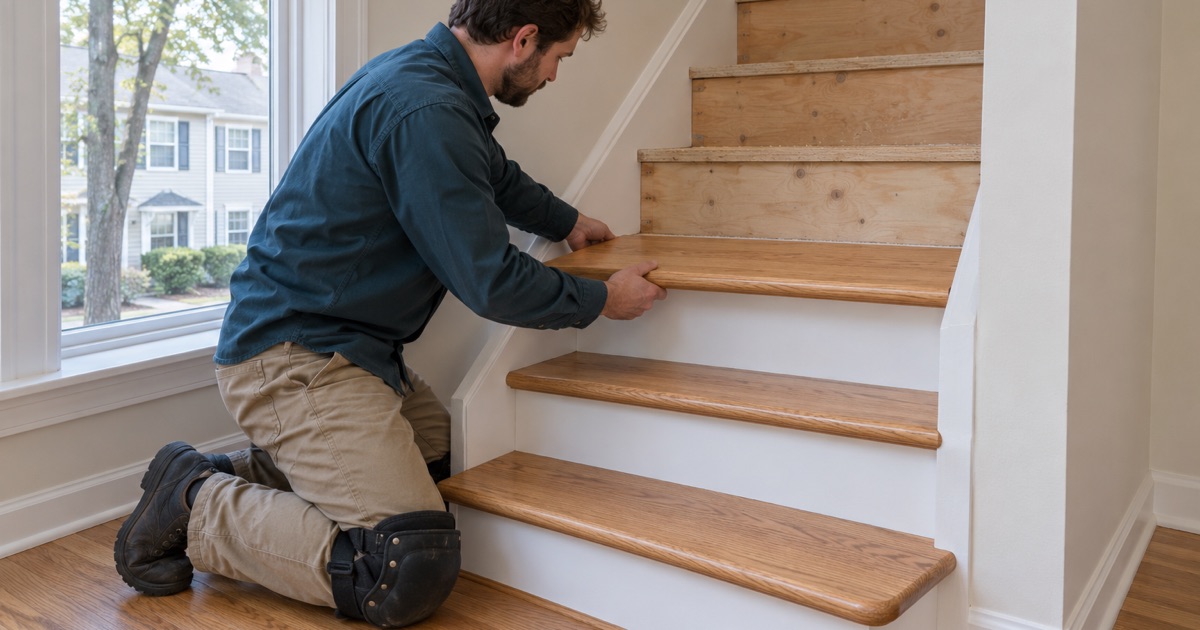
Townhouse projects are planned around the association’s own rules, which we read from the governing documents rather than assume. Some call for sound-reducing underlayment under any new hard floor, some limit work hours, and some want notice before a dumpster or a trailer sits in a shared lot. Townhouse stairs are often the most worn surface in the house, and we quote the treads, risers and stair nosing one step at a time so you see exactly where the cost sits.
Looking for wood-flooring closer to Linthicum? See Linthicum Wood-Flooring.
Approval From the Town and From Carroll County
An incorporated town with its own government
Sykesville was incorporated in 1904 and keeps its own town government, with offices at the Town House at 7547 Main St. That matters for a homeowner because the town is not simply a neighborhood inside the county. Its Planning Department processes zoning certificates and handles building permits on the town’s side, separate from what Carroll County issues.
For a contractor coming from outside, this is the step most often missed. A job that would involve a single county office elsewhere can involve the town as well here, and finding that out halfway through a project costs time that nobody planned for.
What the town’s own wording says
The Town of Sykesville Planning Department states that a building permit is required from the Town of Sykesville and from Carroll County for some interior improvements as well as exterior improvements. Its examples of exterior work include additions, decks, garages, pools, retaining walls and sheds. The interior side of that sentence is left general, and the town does not publish a list of which interior jobs it means.
We treat that gap carefully. We do not tell a Sykesville homeowner that a particular floor project needs a town permit, and we do not tell them it is free of one either. The honest answer depends on the full scope, and the people who can give it are at the Town House and the county permit office.
Carroll County’s side of the process
Carroll County’s own guidance is more specific about interior work. It says a finished basement or interior alteration will require a building permit, and if any electrical work is included, an electrical permit will also be required. New plumbing brings a plumbing permit, and the county lists framing, insulation and final inspections for that kind of project.
The county’s Bureau of Permits and Inspections can be reached at 410-386-2674, and the town itself points property owners to that office before work begins. Because the town’s permit sits alongside the county’s rather than replacing it, a Sykesville project that does need approval may need it from both offices.
Floor Projects That Can Grow Into Permit Questions
Surface work: refinishing, recoating and repair
Most of our Sykesville jobs stay on the surface of the floor. A screen and recoat scuffs the existing finish and adds a fresh coat; a full refinish sands through the old finish, the stain and the rug shadow down to clean wood. Board replacement handles pet urine stains, water stains and termite damage, with new boards woven into the existing floor so the repair does not read as a patch.
Even surface work has rules that apply everywhere. We check the build year and any painted surfaces before sanding, because homes built before 1978 fall under the EPA RRP Rule and Maryland’s lead-safe requirements, and Sykesville still has a few hundred units from those decades. Dust stays in the rooms we are working on, with doors and returns sealed and a HEPA vacuum on hand, and finishes are chosen to meet Maryland’s VOC limits for wood coatings.
When the job reaches walls, wiring or plumbing
Floor projects tend to grow. Opening a kitchen wall to run oak through to the family room, moving a floor register, relocating a radiator or adding an outlet in a new built-in all change what kind of job it is. Once a wall, a circuit or a pipe is involved, the project starts to look like the interior alteration Carroll County describes, and the town’s wording about interior improvements comes into play.
We patch the holes those changes leave, weaving boards into the floor where a wall or register came out. The structural, electrical and plumbing work itself belongs to the right licensed trades, and the permit for it belongs with whoever holds that scope. Old resilient floor tile and black mastic found under carpet or vinyl are another reason to pause, because they get identified and left for the proper trade before anything is sanded.
Homes on Main Street and in the historic district
Main Street sits inside a local and National Register historic district, and the town says property owners there must also submit an application to the Historic District Commission. That review is its own subject, and we do not assume what it covers. If your house is in the district, ask the Town House about it at the same time as the permit question, so the answers arrive together.
Planning Floor Work in Sykesville: Who to Call First
Start with the Town House and the county office
Before a start date goes on the calendar, call the Town House and Carroll County Permits and Inspections with a plain description of the work. Say whether walls are moving, whether any wiring or plumbing changes, and whether the job is limited to sanding, finishing or replacing boards. A short call answers more than any general rule can.
If both offices say the work needs approval, we plan the schedule around it rather than around our own availability. If neither does, you have that answer from the source, and the project can move straight to acclimation, moisture readings and material ordering.
What we put in writing for that call
Our written, itemized estimate is built to be useful in that conversation. It lists each room, the square footage, the stairs tread by tread, the species, the finish system and any repair work, so you can describe the scope accurately without guessing. The same document stays useful later for an insurer, a landlord file or a sale.
Before a color is chosen, we lay stain and sheen samples on your own floor, because red oak, white oak and maple take the same stain differently. Seeing a few options in your light, next to your trim, settles the decision faster than a showroom board ever does.
Owners, landlords and timing
According to the ACS 2024 five-year estimates, 1,121 of Sykesville’s 1,446 occupied homes are owner-occupied, about 77.5 percent. For owners, the main timing question is how long the house needs to stay clear while a finish cures, and we plan fume and drying times around who is living there, including pets and anyone working from home.
The town’s rental homes bring their own steps. For rental floors in houses built before 1978, we schedule around the lead dust test Maryland requires at each change of tenant, and we provide an itemized invoice that gives a landlord the supporting documentation Maryland’s security deposit law asks for. Either way, the work starts after the calls are made and the scope is clear.
- 20+ Years on Wood Floors
- Written, Itemized Estimates
- Dust Sealed Into the Work Area