
Ellicott City Wood Flooring has handled wood floor refinishing in Ellicott City, MD for more than 20 years, serving surrounding cities including Catonsville, Woodlawn, Columbia, Ilchester and Milford Mill. We sand worn hardwood to bare wood, repair the boards that need it, and lay down a new finish that fits the way the room is actually used.
A good refinish starts long before the drum sander. We look at what the floor is made of, how much wood is left on it, what finish is on it now, and whether the house was built before 1978. Those four answers decide whether the floor gets a full sand, a lighter recoat, or a repair before anything else happens.
You get a written, itemized estimate listing each room, the stairs and any repairs as their own lines. It is the same document you can hand to an insurer, file with a lease or give to a buyer, and it lets you compare our price against anyone else’s line by line.
What a Full Hardwood Refinish Involves
Reading the floor before we quote
We pull a floor register or check at a threshold to see the edge of a board. That tells us whether the floor is solid hardwood or engineered, and on solid strip floors it shows how much wood sits above the tongue. Old pine and narrow oak strip floors that have been sanded several times may only have room for one more careful pass.
We also test the existing finish. Older floors were often maintained with paste wax, and wax residue left in the grain will stop a new polyurethane from bonding. Knowing that up front is the difference between a finish that lasts and one that peels in sheets within months of the job.
Lead-safe preparation and dust containment
In a house built before 1978, paint on baseboards, shoe molding, thresholds and stair parts can contain lead. We confirm the build year and look at painted surfaces in the work area before any sanding, and plan the job under the EPA RRP Rule when they are present.
Whatever the age of the house, dust containment is part of the job rather than an extra. Doors and air returns are sealed in the rooms on the schedule, sanders run with dust collection, and each grit is followed by a HEPA vacuum pass so fine dust does not ride into the next coat or the next room.
The grit sequence, from drum sander to final screen
A refinish moves through a grit sequence, starting coarse enough to cut through old finish and flatten minor cupping, then stepping finer to remove the scratches the previous grit left. The drum sander handles the open floor, an edger reaches along the walls, and an orbital sander or buffer evens out the transitions.
Skipping a grit to save time leaves swirl marks and scratches that a stain will darken and highlight. We would rather spend the extra pass than have the finish show every shortcut once the light comes across the floor in the afternoon.
Stain, Sheen and Finish Choices
Stain samples on your own floor
Stain takes differently on red oak, white oak and maple, and even two red oak floors from different decades can read differently. We lay stain samples directly on your sanded floor, in your own light, before you choose. Many homeowners come to us wanting to move away from orange oak, and seeing natural, gray-brown and darker tones side by side settles it quickly.
Sheen level gets the same treatment. Matte and satin hide scratches and dust better than semi-gloss, while a higher sheen shows more of the wood’s depth. We put down sheen samples beside the stain samples so you can judge both together.
Waterborne, oil-modified or hardwax oil
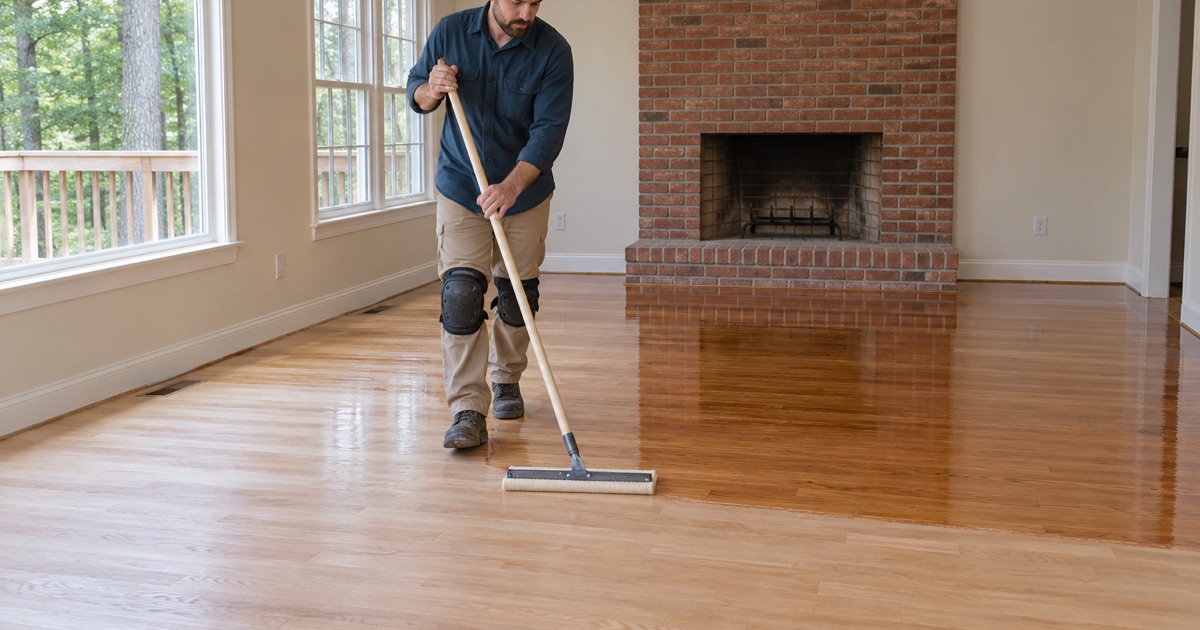
Waterborne polyurethane dries quickly, stays clear and has a lower odor, which suits households staying in the house during the job. Oil-modified polyurethane adds warmth and ambers over time, and many people with older oak like that look. Hardwax oil gives a soft, low-sheen finish that can be spot-repaired without sanding the whole room.
Maryland limits the VOC content of wood coatings under COMAR 26.11.39, which sets 275 g/L for that category. We use products that fit those limits and plan the coats around the household, including fume time, drying time and when pets and children can be back on the floor.
Matching the finish to how the room is used
A kitchen, a mudroom entry and a hallway see more grit and water than a bedroom. For those rooms we recommend an extra coat or a more durable finish, and we suggest mats and felt pads that keep grit off the new surface. The goal is a floor that looks right on the day we leave and still looks right years later.
Refinishing Floors in Ellicott City Homes
Builder oak from the 1980s through the 2010s
Nearly three-quarters of the homes in the Ellicott City census area were built between 1980 and 2019, and many still carry their original builder floor. Some are solid red oak strip that refinishes well; others are prefinished or engineered boards with a beveled edge that cannot be sanded flat without cutting through the wear layer.
We identify which you have before talking about color. A solid floor with traffic lanes and orange tone is a classic full refinish, while a worn prefinished floor may be better served by a recoat or, in some rooms, replacement.
Older houses near the historic mill town
The Ellicott City Historic District covers buildings put up between 1772 and 1950, and older houses in and around it often have narrow strip or pine floors that have been sanded and patched more than once. Those floors reward a lighter hand: we sand only as deep as the damage requires and keep as much of the original wood as possible.
Where radiators, registers or old walls once stood, we weave new boards into the floor before refinishing, so the repair follows the run of the existing boards rather than appearing as a square patch.
Water stains and flood-damaged floors
Homes along the stream valleys here have seen serious flooding, and smaller leaks leave their own water stains. A dark ring from a plant or a leaking radiator may sand out; a floor that cupped or turned black from standing water needs drying and board replacement first. We read the floor with a moisture meter before sanding, because refinishing wet wood only locks the problem in.
When a Refinish Is Not the Right Answer
A screen and recoat instead
If the finish is worn but the wood beneath it is still covered, a screen and recoat lightly abrades the existing finish and adds a fresh coat. It costs less, takes less time and removes no wood, which makes it the better choice for a sound floor on a tight schedule.
Repairs that come before any sanding
Squeaky floorboards, nail pops, loose boards and board gapping should be fixed before a refinish, not after. We refasten loose boards, replace damaged ones and deal with any old resilient floor tile or black mastic found during prep, which we identify and leave for the right trade before any sanding nearby.
Engineered floors with a thin wear layer
An engineered floor can only be sanded as deep as its wear layer allows. When that layer is too thin for a full sand, we say so plainly and lay out the alternatives, from a recoat to replacing the floor in the rooms that need it.
- 20+ Years on Wood Floors
- Written, Itemized Estimates
- Dust Sealed Into the Work Area